
Report on the ANGFA 2007 Darwin Convention — What a Wonderful Place for an ANGFA Convention
Source: ANGFA News, Issue 30, August 2007, pages 10–17. Author: Tony Tucceri. View original scan (PDF)
“What a wonderful location for a convention!” That’s what my new friend said to me as we stood waiting for our luggage to appear on the carousel at Darwin airport. We’d met only a couple of hours earlier on the flight to Darwin and exchanged the usual pleasantries. He was on business, and I guess I was on business and pleasure. I told him about ANGFA and that it had been going strong for over 25 years and he was suitably impressed. He marvelled that ANGFA had a history of holding its conventions around the country and couldn’t believe it was all done by volunteers over many years. He thought we showed tremendous spirit. This word intrigued me. As we were talking, my mind drifted back to all the hard work performed by a small dedicated team of Northern Territorians leading up to this convention. In truth, this small team represented the spirit that has kept ANGFA going. Maybe “spirit” wasn’t the right word but all those meetings, phone calls, e-mails, discussions, all that hard work was about to pay off and become reality. Congratulations are well deserved by Heidy and Alan Rubin, Helen Larson, Robyn and Dave Wilson; and John Grylls for organising this convention and keeping the ANGFA “spirit” alive and well.
I had never been to Darwin so with luggage finally in hand, I made it out the airport doors and to my complete surprise was welcomed by the hustle and bustle of a major Australian city. Unlike my preconceived ideas, Darwin is not a tiny country town or sleepy hollow. This place is “buzzing”. The main road was lined with tall palm trees swaying in the breeze. The air was warm and inviting. Not too hot and not too cold. The sun was shining and the locals are the friendliest people I have ever met. More laid back and friendlier than anything I was used to coming from the big smoke down south. I guess everyone is friendly in an environment as inviting as this one. As soon as I saw this scene I made up my mind that my new friend was right about Darwin being a wonderful location for our convention. The “capital” of northern Australia is closer to Jakarta than it is to Sydney, and closer to Singapore than it is to Melbourne, so it should come as no surprise that it looks outward to Asia as much as it looks inland to the rest of Australia. This proximity and familiarity with Australia’s northern neighbours is reflected in the town’s relaxed, cosmopolitan, tropical atmosphere. In a country that prides itself on its ethnic diversity, Darwin may be the most multicultural city of all.
In no time, I was checking in to the hotel. And what a palace this was. I knew that Andy Wattam had negotiated a terrific deal for ANGFA at some 5-star hotel, but the Crowne Plaza Darwin is simply the best accommodation in Darwin, situated in the centre of Darwin’s lively cafe strip.

Crowne Plaza Darwin — photo © Jan Cousins
Saturday morning began with a most wonderful and highly appropriate audio visual show that captured the ANGFA “spirit” (there’s that word again). You could see Dr Helen Larson’s hand in its creation because it started off with a welcoming photo of a goby and continued on with a brilliant word association of the letters that spell “ANGFA” – ‘A’ is for Artwork depicting Ron Bowman’s hand drawn blue eyes poster, and ‘N’ is for nursery fish, and ‘G’ is for glossogobius, and ‘F’ is for fisherman, and ‘A’ is for A nice place, and so on. The photos were excellent and projected the true nature of why ANGFA exists. All this was accompanied by haunting music and the whole show brought a lump to our collective throats.
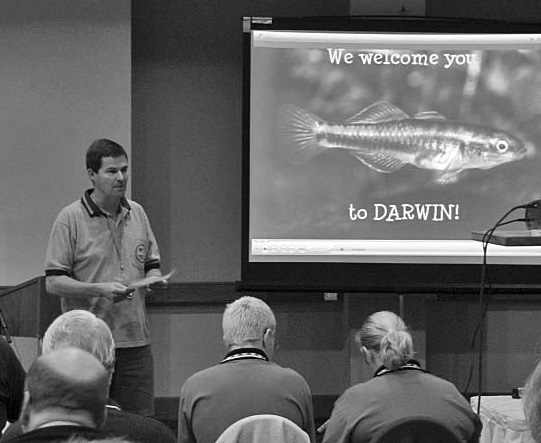
ANGFA National President Glenn Briggs welcoming attendees to convention — photo © Tony Tucceri
And so we started with ANGFA President Glenn Briggs giving the welcoming address and quickly moving on to our opening speaker Dr Helen Larson. Helen opened proceedings by introducing us to “The fish fauna of the Northern Territory” and her first few slides depicted indigenous rock art showing fish paintings dating some thousands of years. This was followed by a general description of the northern coastline and mangroves; and excellent photos of fish inhabitants. And of course, those marvellous gobies with their disproportionately huge mouths. Helen’s presentation finished far too quickly, it was first class and set the scene for the rest of the convention.
On came Ron Bowman to talk about the new ANGFA publication “The Bowman Letters” (limited edition available to members for $30). Ron explained he had assembled a pre-ANGFA history of the search for knowledge of Australian and New Guinean fishes with an intriguing insight into the lives and opinions of scientists, collectors and aquarists. A short break for morning tea and we were back to continue with this convention’s main theme of “Conservation through sustainable use of natural resources”.
Brad Pusey talked about “Research underpinning sustainable development in northern Australia” and promptly informed us that Australia’s wet-dry tropical rivers discharge over 70% of the continental water total into the Gulf of Carpentaria and the Timor Sea. Did you know this comprised 55 rivers that covered 20% of Australia (millions of square kilometres) and that there were less than 150,000 people in the area? Additionally Brad produced a number of flashy slides full of data but I recall one in particular that showed that despite overall perceptions that Australia is getting drier, the reverse is partially true; that in fact the data showed that the north is getting wetter and the south is getting drier. Brad explained a number of projects under the auspices of the Australian Centre for Tropical Freshwater Research, James Cook University and the Australian Rivers Institute, Griffith University. One of the projects that stood out for me was the “Northern Australia Freshwater Fish Project” that aimed to identify areas of high conservation significance.
Mark Kennard came on to talk about another of the projects “Protecting riverine flow regimes: a key to freshwater fish conservation in Australia”. Mark explained with lots of supporting slides that River flows are key to maintenance of aquatic biodiversity. Flow changes impact fish because of loss of cues for spawning and migration, reduced spawning opportunities, reduced recruitment success, restricted movement opportunities, loss of food supplies, reduced habitat availability, increased risk of stranding and increased risk of invasion by alien species. It’s unfortunate that Mark’s data showed how few of our rivers are truly protected with only 4% within reserves and only 2% dam-free from headwaters to mouth.
Lizzie Sullivan, an indigenous woman from the Wagiman tribe presented on the Daly River Fish and River Flows Project. Lizzie is the Wagiman Representative and Daly River Aboriginal Reference Group Delegate and Daly River Fish and River Flows Project Steering Committee Member. She explained the role that indigenous people were playing in these significant projects. Lizzie produced several unique photos showing how electro fishing is done, Northern Territory style. To loud applause, we all wished Brad, Mark and Lizzie the best of luck in their project endeavours.
How highly appropriate that our next speaker was our intrepid explorer Heiko Bleher. Heiko has an ability to get into remote places anywhere in the world and his presentation was appropriately about very remote destinations in Indonesia. There was some doubt as to how many Europeans had been to these remote island locations in the Aru Islands and Kalimantan of eastern Indonesia. Heiko showed some magnificent photos of the treks made in what can only be described as true wilderness. It was wet and inhospitable, which made me feel envious in one way because I’d love to experience nature at its most pristine, but also felt relieved to settle for this fabulous arm chair ride. Unfortunately, like previous speakers, Heiko made the same point about destruction of habitat and consequent loss of fish species. As we drew to a close, the morning’s speakers had all been fantastic, and we knew as we went to our lunch break, that the Darwin Convention was going to be the best ever.
After a lovely lunch break, it was appropriate that Glenn Schipp gave an interesting presentation outlining the importance of fishmeal in the aquaculture industry. Fishmeal of course is the main food source drawn from a variety of sources and the by-product of fish catching and cannery operations. It includes Peruvian anchovy, Blue whiting, Japanese anchovy, Atlantic herring, Chub mackerel, Chilean jack mackerel, Capelin and European pilchard, but is it sustainable? One conclusion drawn was that based on available evidence the ‘fishmeal’ fisheries are managed on the basis of strict controls and the majority appear to operate sustainably. We know we have to look for replacement to fishmeal and we expect that over the next decade, the proportion of fishmeal used by the animal production sector is expected to fall and the use of vegetable-based protein and oils to increase. This was an optimistic view that Glenn tempered somewhat when he mentioned the impact of China was still an unknown.
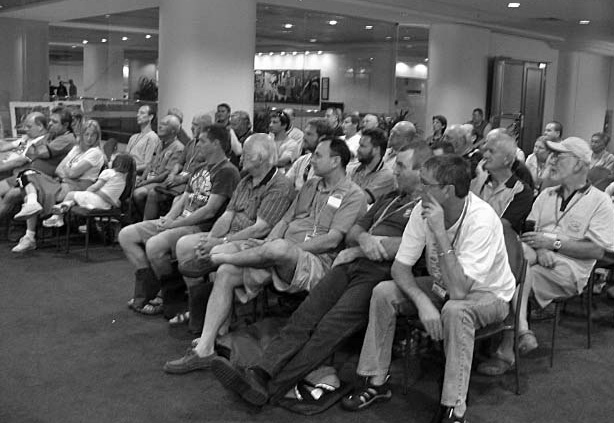
View of some of attendees to 2007 Darwin Convention — photo © Tony Tucceri
From fishmeal to frogs, or more correctly to Graeme Sawyer and his wonderful talk on that intrusive Cane Toad and how we’ve been fighting back. Graeme demonstrated the impact of cane toads and made it plain that lizards could face extinction from these intruders. Frilled neck populations were decimated, apparently due to death from eating cane toads. Graeme has been the focal point for motivating Northern Territorians to trap, catch and hand in cane toads. Encouraging mini projects of kids and schools to tackle this problem has had some benefit. Still, the fight goes on.
Mike Hammer was the next presenter and he summarised a recent study on the Port River estuary that investigated four gobies new to the region. Mike brought along heaps of glorious goby photos and habitat photos and explained that all sampling work had been undertaken using dip net, torch and even hand sampling. We had a quick afternoon tea break and were greeted upon our return by an enthusiastic Dr. Binh Thanh Thai from the School of Science and Primary Industries, Charles Darwin University. Binh gave an informative talk on the taxonomy and evolution of common carp (Cyprinus carpio L.). This fish is one of the most widespread freshwater fish in the world, and includes European carp, mid-Asian carp, Far Eastern carp, South East Asian carp and more. We know a lot about this fish and yet, Binh showed that we know very little about this fish genetically. It made me wonder what hope there is of properly classifying newer discoveries.
And so we moved onto our final speaker of the day, David Lawson. David happily admits to being a pom, but not your usual one. He’s been involved in conservation in one form or another all his life and even spent 7 years in the Northern Territory. The stories he recounted of the means to which we go to poach wild life were amazing and disappointing; birds, reptiles, monkeys, fish, nothing it seems was safe from the illegal trade. Unfortunately David explained the personal frustrations he’s had to go through with austere bodies such as the United Nations in order to get simple agreement on wild life issues over the years. And still he perseveres. Sustainable use of wild life resources has probably been a good thing and “saved” several African wild life populations from extinction. Asia is now going through the same cycle and we hope achieves a much better outcome. There is hope for the future.
And on that positive note all members agreed the day had been well worthwhile. The Saturday night dinner was held at a nearby outdoor restaurant that included lots of local culture. The food was excellent as we were becoming accustomed to the local tradition of generous helpings. Food, drink and conversation flowed happily and freely with the highlight of the night being several extraordinary belly dancers. No one minded when certain intrepid ANGFA members were encouraged to perform their own version of belly dancing. I’d like to report on their clumsy efforts, but if truth be known, Eddie Tootell, Andy Wattam and I thought I saw Bruce Hansen, Steve Baines and several others out of the corner of my eye, who were surprisingly very good dancers. I jest. But it was a good night to accompany what had been an excellent first day.
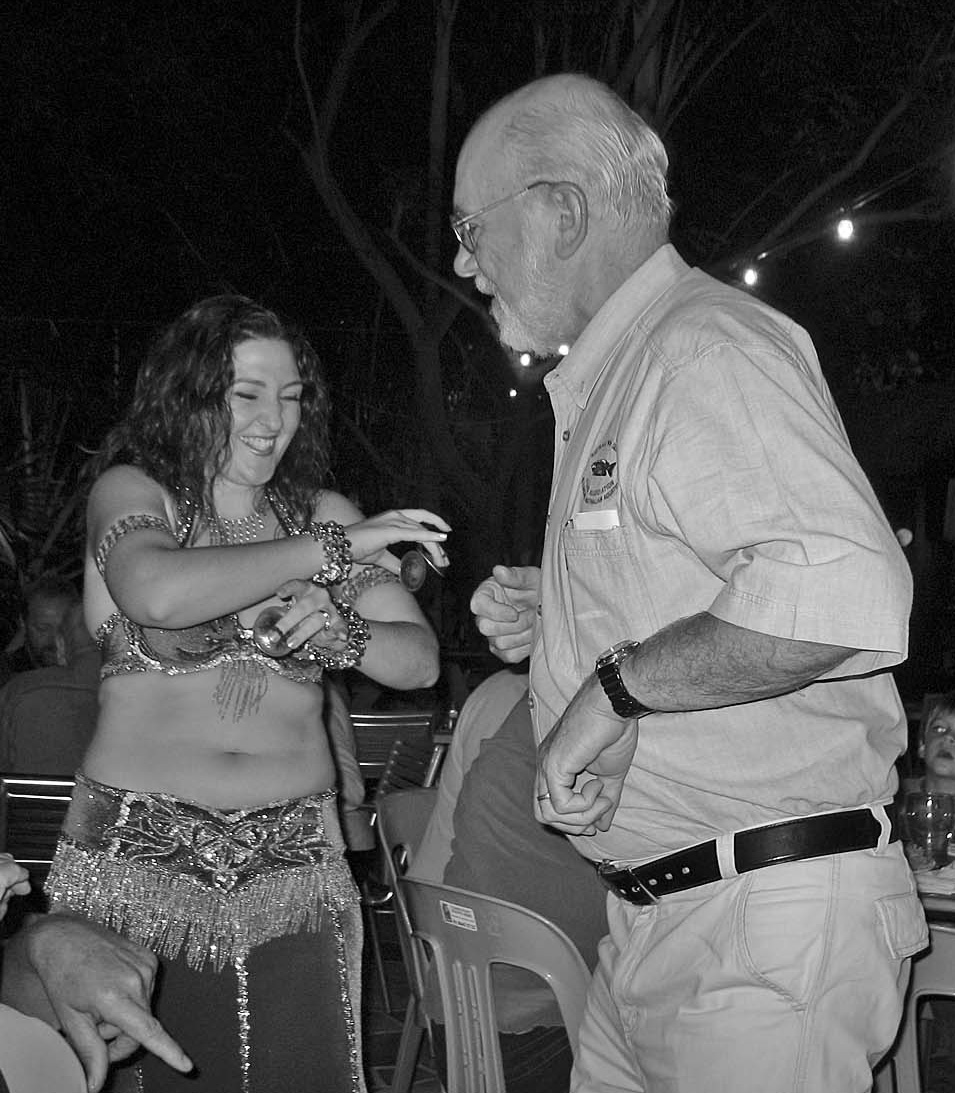
Eddie Tootell tries out “Belly Dancing” at the Saturday night function — photo © John Cousins
Sunday morning started off with Dion Wedd from the Territory Wildlife Park (TWP) giving us an inspired view of conservation and the roles that zoos should be playing. Dion’s presentation was based on conservation being an attitude, belief or value held by an individual and that Zoos operate as a medium to help change peoples’ ingrained paradigms about animals and habitat. We can all become conservationists and the modern zoo existed to shift our attitudes to show that you could have happy, healthy animals in a zoo that interacted with people in a safe supervised environment. Kids are the main target group. The TWP aimed to provide people with an unexpected experience so they could leave with a changed attitude. And to prove his point, Dion brought his famous albino carpet python and called for volunteers from the audience. At over 4 metres long, this was no ordinary snake. I’d guessed that Dion needed someone to ‘interact’ with the snake so I stayed well clear of the stage. Or so I thought. With 78 people in the audience, all eyes turned to yours truly. It took a few moments before I summoned the courage to do what I’d heard only minutes earlier, namely to change my own personal attitude towards snakes. So yes, off I went on stage to “interact” with the famous albino carpet snake. Dion made sure I was safe (there was never any danger to me but I was worried about the snake) and slowly allowed the animal to coil around my arms. I knew I was in for a bit of fun with this one. For me this was a unique feeling, not slippery or slimy as I had expected, but cool, dry and oh so gentle. I am not suggesting everyone go out and try handling one, but as odd as it sounds, my attitude to snakes has now changed and I will gladly help in their conservation, just like I do with fish. Handling them, maybe not, but conservation, yes. Order was restored and we got on with the convention.
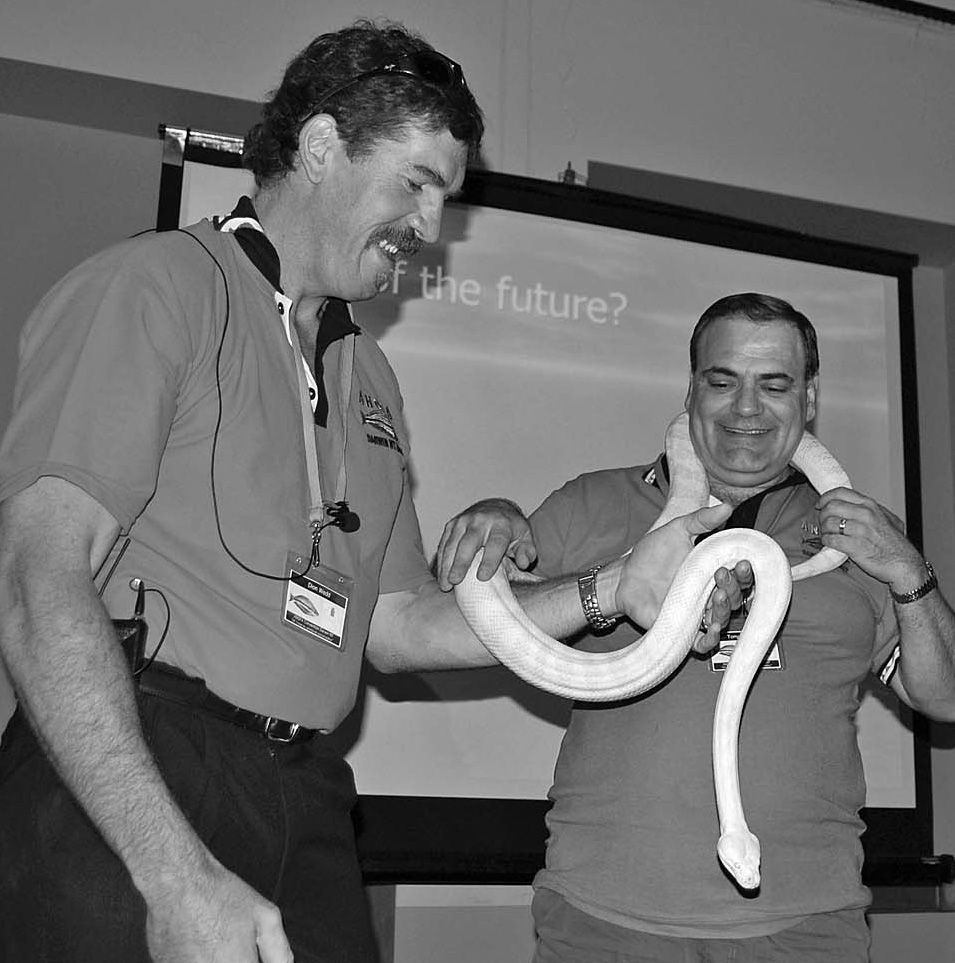
ANGFA Treasurer Tony Tucceri tries very hard to smile whilst absolutely petrified by “Blondie” the python being handed to him by Dion Wedd from Territory Wildlife Park — photo © Leo O’Reilly
Our next speaker, John Humphrey told us about the spread of disease in freshwater fish. We watched as he produced maps showing particular diseases appear in one location, and then appear several years later in other locations thousands of kilometres away. One such disease was the Epizootic Ulcerative Syndrome which is an ulcerative disease of estuarine and freshwater fish caused by the fungus Aphanomyces invadans. It affects natural and farmed populations and appeared in Brisbane in 1972. By 1974 it appeared in Sydney, then in 1975 in New Guinea, in 1979 in Indonesia, in 1985 in Malaysia and finally in 1986 in Darwin. This was just one of many items discussed by John. The implications for ANGFA were simple. We have to continue to promote conservation, propagation and rehabilitation through limiting spread of disease and parasites. Never release fish into natural waters. Never translocate abnormal fish. Never discharge untreated transport water into waterways and always decontaminate nets and equipment between waterways.
Angus Duguid did a survey of fishes in Central Australia and shared it with us. It was outstanding to think that all these fish survived for the most part in small watering holes as none of the rivers runs on a regular basis. Fishes found included Craterocephalus centralis (Finke Hardyhead), Chlamydogobius japalpa (Finke Goby), Mogurnda larapintae (Finke Mogurnda/Gudgeon), Ambassis sp. (Glass Fish), Leiopotherapon unicolor (Spangled Grunter or Perch), Nematalosa erebi (Bony Bream), Neosilurus hyrtlii (Hyrtl’s Catfish), Amniataba percoides (Banded Grunter) and, of course, Melanotaenia splendida subsp. tatei (Desert Rainbow Fish).
From fish to plants, Shaun Winterton produced some of the most amazing photos of plants that we’ve ever seen. Surprisingly common species that we keep in our aquariums looked totally different when given the right conditions to flower. The best way to summarise Shaun’s presentation is to take him up on his offer of visiting his website to see his plant key which is freely available — Aquarium and Pond Plants of the World, Edition 2.0, by Dr. Shaun L. Winterton and Julia Scher, an identification and information tool that covers aquatic plants in the aquarium and pond plant industries worldwide.
Blair Grace gave an educational talk on NT aquarium fishery. We learned that the most harvested fish in NT are the Silver scat, Common archerfish, Spotted scat, Eel tailed catfish, Chequered Rainbowfish and Black-banded Rainbowfish. Bruce Sambell included a humorous look at the growth of his fish-breeding business in Queensland. On a more serious note Bruce was the first to spawn freshwater archerfish and gave a pictorial insight on how this was achieved. So in time we can buy farmed freshwater archerfish and have one more species under the banner of sustainable use.
Our good friend John Seyjagat brought us up to date on the Australian exhibit “Animal Planet Australia: Wild Extremes” at the National Aquarium of Baltimore. He brought along many photos of the finished product, an authentic Northern Territory river gorge complete with crocodiles, barramundi, rainbows, reptiles and birds. John said the public reaction had been phenomenal and we have a standing invitation to visit the exhibit ourselves.
Chris Humphries is part of the Environmental Research Institute of the Supervising Scientist’s (ERISS) which has been involved in undertaking research and monitoring associated with the Ranger uranium mine since 1978, just prior to commencement of mining in 1980. Ranger expects to cease mining in 2008 and milling in 2020. End of decommissioning and rehabilitation is expected in 2026. Chris took us through the many sampling methods with the help of local people. Naturally, they had to come up with safeguards due to the area being crocodile country so we saw some croc safety nets too. The good news was that there was no reported impact on fish communities observed from Ranger uranium mine. This finding was supported by other lines of monitoring evidence. ERISS will continue to monitor aquatic ecosystems through rehabilitation phase of Ranger uranium mine.
In a similar vein, but a million miles away and a few years earlier, Keith Martin gave a report on monitoring of Aquatic Ecology at the Batu Hijau Mine Site in Sumbawa, Indonesia. Amongst his collection of photos was a fascinating photo showing literally millions of gobies (Neon Goby – Stiphodon semoni) huddled together crawling along a large boulder exposed to the atmosphere in a migrating swarm to get past an upstream obstacle. Needless to say, the mine had some impact on the ecology including sedimentation during construction, loss of some areas of aquatic habitat and acid runoff from waste rock areas. However, over time, stream obstructions (physical or chemical) were minimised, impacts were contained to relatively small areas of the catchments; disturbance effects (eg. sedimentation) were short term. And there was a Biodiversity offset through development of a new National Park in the Tatarloka area.
Our final speaker was Andrew Lo who gave us an at times humorous, always passionate perspective of “A Fish Lover’s Pursuit of Ecological Sustainability”. It was a great way to end the convention because Andrew showed that if we couldn’t act globally then we could, and indeed should, still conserve and restore locally.
Sunday night we were taken to a barbeque dinner at the Territory Wildlife Park, complete with a guided tour through their freshwater and marine aquarium. This facility needs to be seen in person as photos will not do justice to the magnificent tanks on display. Plant growth was superb, with plants growing below and above the water in a huge display of tanks. The size of some of the rainbows, Melanotaenia trifasciata in particular, had to be seen to be believed.
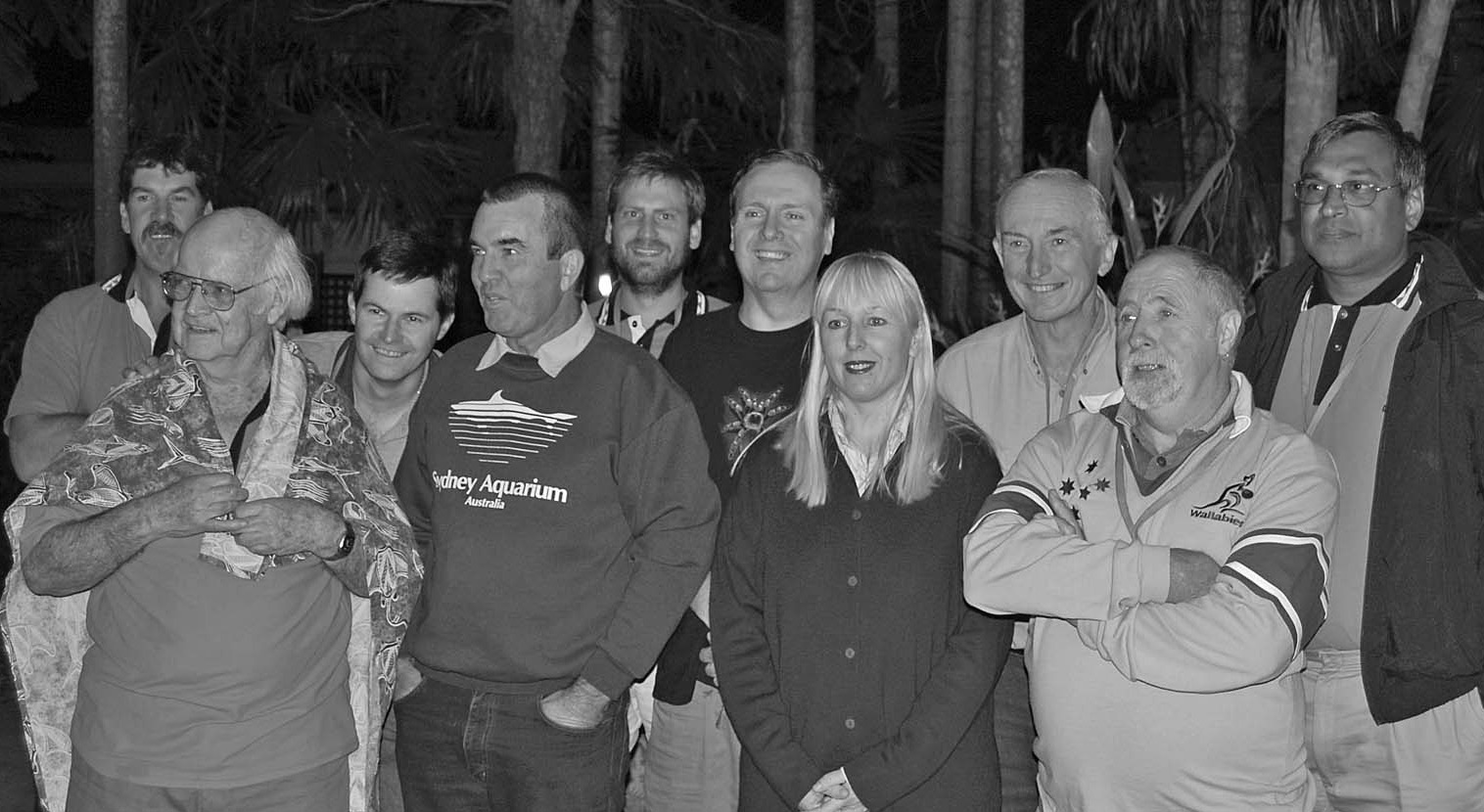
Some of the ANGFA personalities and presenters at the TWP BBQ — photo © Leo O’Reilly
The dinner itself was sensational and we have our friends and sponsors to thank for their financial support in making this possible, in particular Dion Wedd and the staff of the Northern Territory Wildlife Park and John Seyjagat and the staff from the National Aquarium in Baltimore. Thank you gentlemen for your financial support.
Like all conventions, there is so much more we could write about. Those ANGFA members and spouses who were present all had a wonderful time and the even luckier ones stayed on for a few more days to sample further sights and delights of the Northern Territory. ANGFA conventions are the premier event on every ANGFA member’s calendar and all we can do is invite you to enjoy the next one in 2009. It will be hosted by ANGFA NSW.
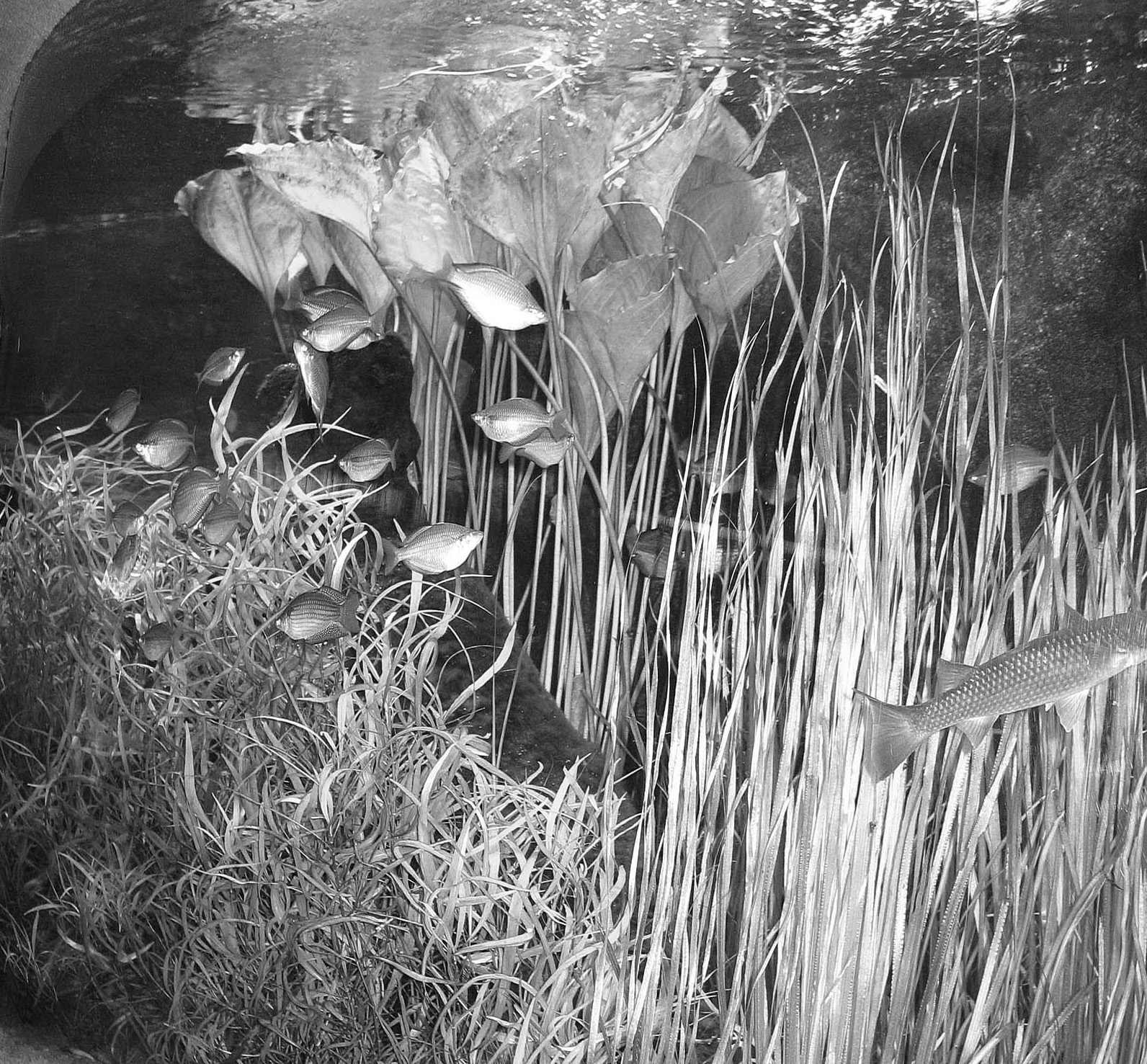
Just one of the many magnificent display tanks to be seen at the Territory Wildlife Park — photo © John Cousins
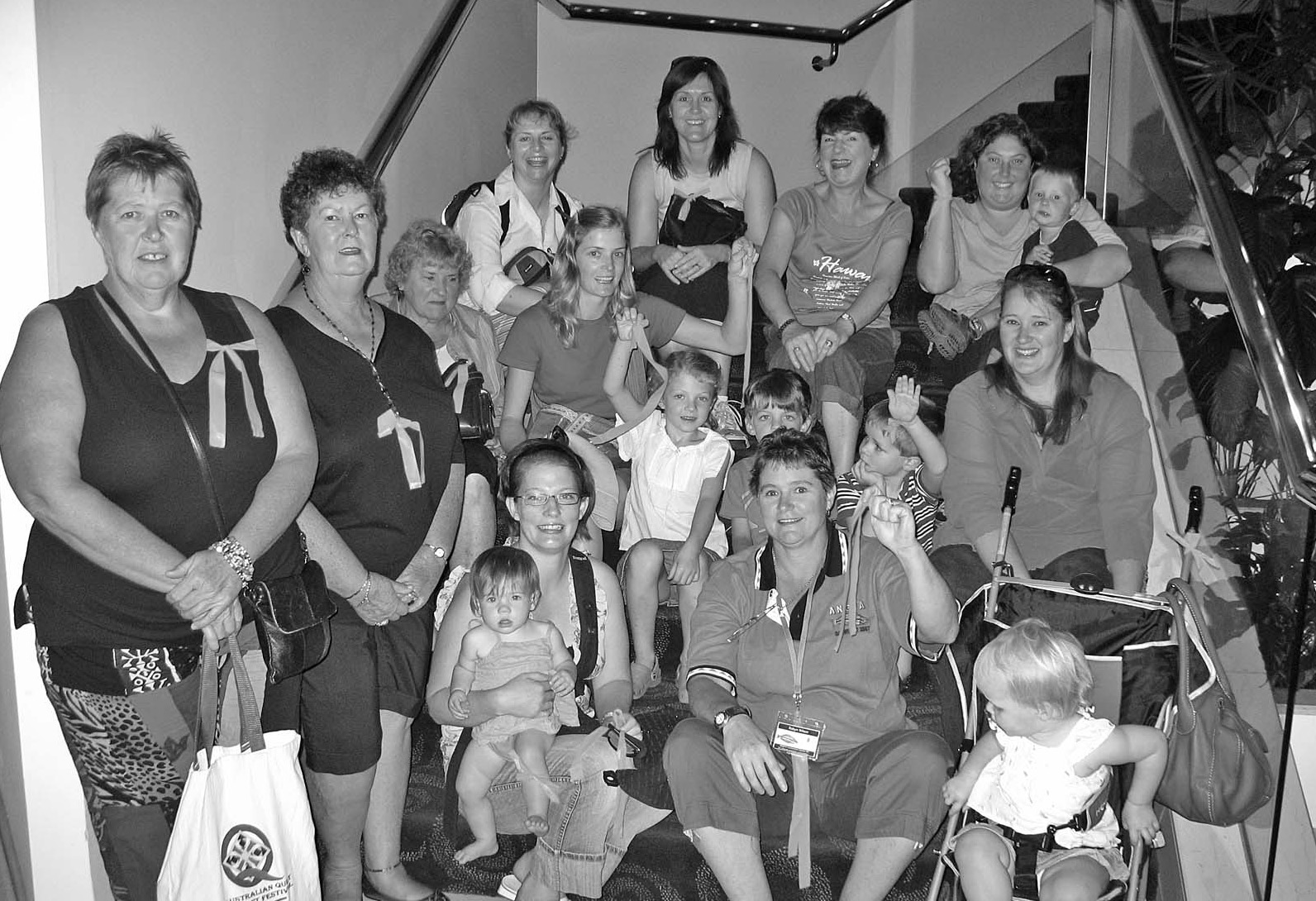
“The Fish Widows” and families prior to heading off for a delightful day out — photo © John Cousins