
ANGFA Convention 2009 — Sydney
Source: In-Stream 19(4), April 2010, pages 7–11. Author: Bruce Hansen. View original scan (PDF)
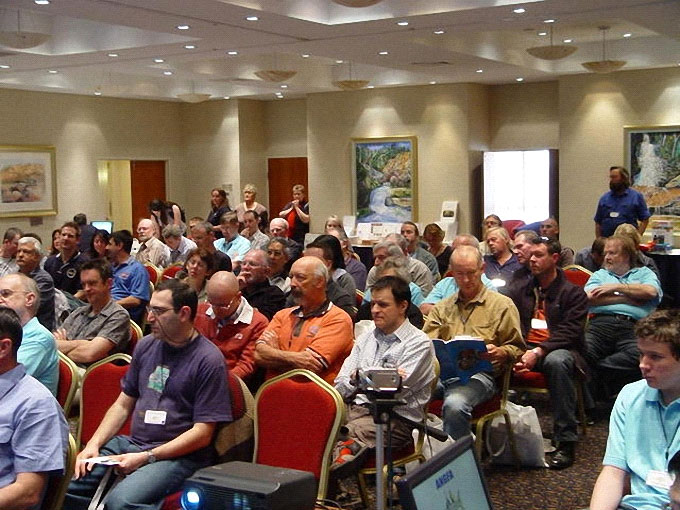
September 11–13th was the time interval for the 2009 ANGFA Convention in Sydney and the Parramatta Marriot became “Mecca” for the native fish “faithful”. The organising committee from ANGFA (N.S.W.) had done a great job putting together a venue and a programme to make it a memorable weekend. Once again it was a great opportunity to catch up with old friends and make new ones, as well as find out more about what’s happening in this fascinating hobby of ours.
Friday evening after settling in to our very comfortable accommodation, we helped with the venue set-up and registration and then attended the AGM for the usual regional round-up reports and club membership business session. The highlight of the evening was the awarding of Life Membership to Tony Tucceri for his outstanding contribution to the current success of ANGFA and Tony was not only surprised and moved by the award but was temporarily rendered almost speechless (a very rare state for Tony).
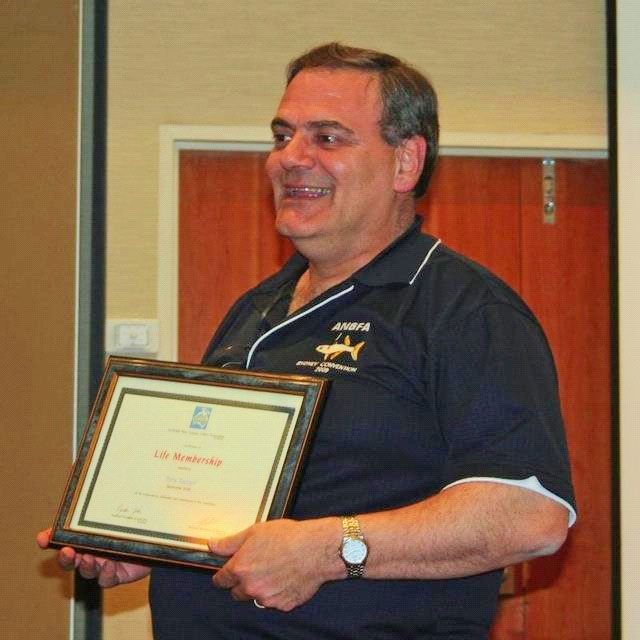
Tony Tucceri with life membership certificate
Our sponsors had been extremely generous this year and the array of prizes for the sessional raffles attested to this. It was also a good opportunity to check out the spectacular range of convention merchandise featuring the Pacific Blue-eye logo. Items on sale included coffee mugs, cooler drink holders, patches, caps, hand towels, spray jackets and a selection of shirts. Selections available ranged from the pale blue polos, through chambrays to long-sleeved collecting shirts in optional colours and sizes. The evening concluded with convivial drinks and conversation in the lounge bar.
Saturday morning saw the usual frantic registration and last-minute fine-tuning of the technology before the opening addresses by patron Sue Carson, Lyndon Giles (national president) and Derek Girkin (NSW president). First speaker was John Cousins, the co-ordinator of the Rainbowfish Group charged with “Preserving rarer fish in the hobby”. He advised us on the principles underlying the system being used by the group which is based on the AKA model – sex ratios, random selection, back-up populations, buddy system with annual swaps etc. If you are in a position to help with this important aspect of the hobby please contact John.
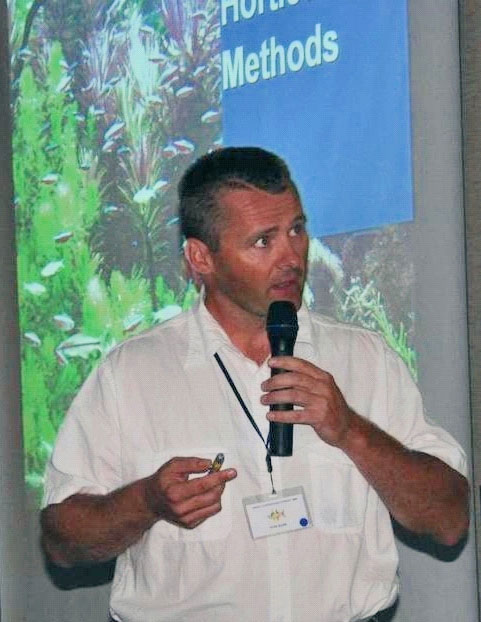
Tom Barr
For many aquarists our next speaker, aquatic gardener extraordinaire, Tom Barr from the USA was a major drawcard for the convention. Tom has impressive academic qualifications as well as occupational and hobby experience to underpin his stature as a speaker and his topic was “Methods for Aquatic Horticulture – How are non CO2 and CO2 Enrichment Different?” He showed us how plants are able to adapt to a wide range of natural and artificial conditions and illustrated his talk with some spectacular images of both natural systems and some of the tanks he maintains professionally. Tom is a clear, confident speaker in full command of his subject and enjoys “demystifying” the many “fears and myths” associated with the fascinating world of aquarium horticulture.
After morning tea, Doug Hoese presented “Gobioid Fishes of Australia and New Guinea”. Doug is a Senior Fellow at the Australian Museum and an expert on the systematics and general ecology of shore fishes of the Indo-Pacific. In quick succession Doug waltzed us through the numerous groups of gobies and gudgeons found in our region from the tiny to the substantial. Throughout his talk came a torrent of information, much of it advising us of further work still in progress on these fishes. For example the genus Glossogobius that has some 8 species in Australia but perhaps 30 in PNG, the fascinating torrent gobies (e.g. Stiphodons) and possible further species within the snakehead gudgeon group.
Rainbowfishes then took centre stage. Mike Young from the University of WA is doing his Ph.D. research on the evolutionary biology of the western rainbowfish. He gave us an insight into the complex world of assessing the factors involved in sexual selection, predation and persistence of the various phenotypes that become representative of the various geographical populations. The final answer may indeed be that large males with large colour pattern elements will succeed and the pattern persist in areas with lower predation risk.
After an enjoyable lunch came one of the conservation highlights for those that like “big” fish. Stirling Peverell has accumulated a massive amount of research time on freshwater elasmobranchs in Northern Australia and enthralled us with his presentation on these threatened species and the conservation measures being taken to aid their survival. I’m sure very few of us realised the sheer physical effort involved in the field work and the extent to which these populations have been reduced. Hopefully the recovery strategies will get the budgetary support necessary. It was a fascinating insight to see that conservation efforts are now enlisting public support with appeals to the public to increase awareness of the plight of Sawfish as well as information to children via the schools.
The conservation theme was continued by our next speaker, John Merrick with his presentation “The big Murray – where to from here? Conservation of the Murray crayfish”. Dr. Merrick is widely published on many aspects of Australian freshwater biology from finfish to invertebrates. To us he is best known for his blue “bible” on native freshwater fishes which is still considered the best reference work on this group. The talk covered the biology of Euastacus armatus and their current conservation status; the second largest freshwater crayfish in the world. Finally he outlined some management recommendations for this iconic species.
Yours truly was next. This was not another ANGFA “collecting travelogue” which everyone else does better but a somewhat light-hearted look at some of the hazards, pitfalls and risks associated with the keeping and collecting of native fish. In keeping with my love of alliteration the alternative title for this talk was “Hansen’s Hobby Hazards”. These perils of piscatorial pursuits apply to all breeds of puddle pirates – whether they be benthic botherers, leaf-litter looters, billabong bandits or pelagic pillagers. The idea behind the presentation was “awareness” not only for us but for our families to remind them what “heroes” we really are “facing these dangers” on a regular basis.
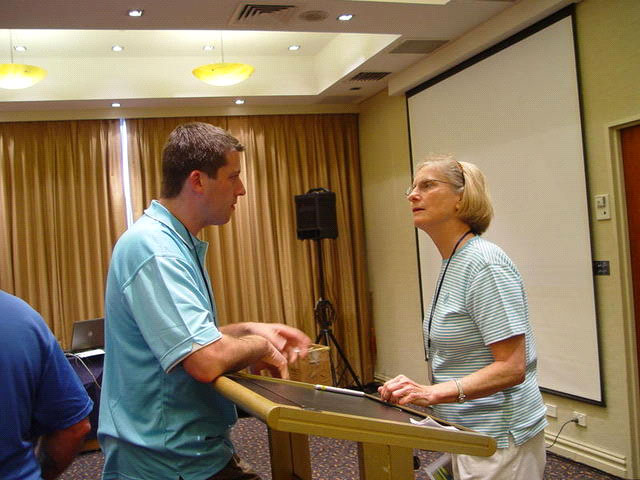
Lyndon Giles & Diana Walstad
Next was our other guest speaker from the USA, Diana Walstad. Diana is a trained microbiologist and manages a molecular biology laboratory in North Carolina so is eminently qualified to talk to us about the problem of Mycobacteriosis in aquarium fish. Her talk was based on her practical experiences with this “stealth” disease that so commonly affects our aquarium inhabitants and the message was that although there is no “cure” the disease is manageable and eventually your valuable fish can develop some degree of immunity if given enough time. She also extolled the value of good aquarium management and UV sterilisation. Although mycobacteria are resistant to chemical treatments they are as susceptible to UV as other bacteria. It was a relief to learn that perhaps tearing down the affected display tank was no longer mandatory.
The final presenter for the day was David Cooper, who is Special Projects Manager at the Mahurangi Technical Institute in New Zealand. David was an enthusiastic and entertaining speaker whose presentation was “New Zealand Native Fish for the Aquarium”. He opened with information about the institute which includes Aquaculture and a training course for aquarium shop employees on the list of courses offered there. He then showed us a series of smallish native species suitable for pond and aquarium use. Some of the galaxiids overlap with ours and they have a range of attractive Gobiomorphus species (we call them gudgeons, they call them “bullies”) as well as their own smelt and several other endemic fishes.
Saturday evening is traditionally time for the Convention dinner after a few drinks and then on to the auction where we are often able to bid for items rarely available elsewhere. We were extremely fortunate in the generosity of several members and supporters who donated valuable and rare stock to help ensure the financial success of the Convention. The auctioneers were busily handling the bidding while the helpers facilitated the flow of boxes and recorded the details. Although there were many “bargains” to be had there were also examples of “bidding wars” for some individual items that went for surprising sums. The discerning few were able to snap up such rarities as the native Caridina zebra shrimp, Pseudomugil signifier from the Torres Strait, uncommon rainbowfish from PNG and a nice range of native and exotic aquarium plants as well as many other desirables. A few hardy souls partied on afterwards.
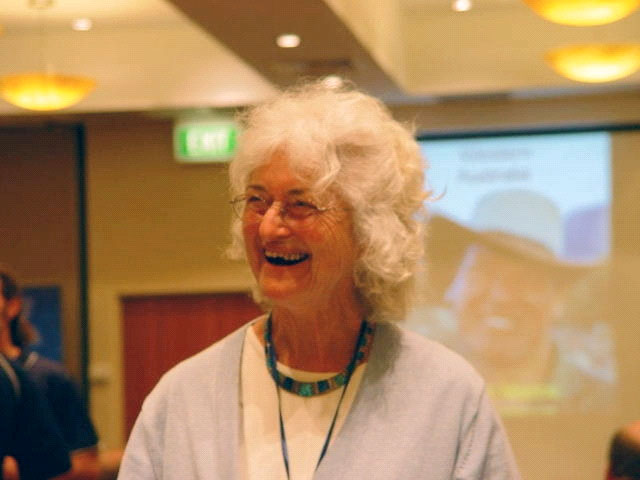
Jean Joss
First cab off the rank on Sunday morning was one of our IRG “boomerangs”, Franz-Peter Mullenholz. He just keeps on coming back and we love to see him. FP loves all things Australian (except insect bites) and especially our beer and his camera and presentations tell the story of his enjoyment, his appreciation of the beauty of nature and his lively sense of humour. This presentation was entitled, “ABC: Australia’s Beautiful Colours” and it was a joy to behold as he showed us a distillation of images from his many trips here with his wife Ulli and often in the company of Gilbert and Hilda Maebe. You know when a show has “hit the spot” when there isn’t a face in the room without a smile on it.
Next came Dean Gilligan who heads the NSW Department of Primary Industries research team. His presentation was “From genes to ecosystems: NSW Department of Primary Industries research into all three levels of biodiversity”. It was fascinating to see the results of this work even if some of the information was somewhat depressing – the surveys ranged from state-wide down to genetic diversity at the site-specific level when dealing with threatened species. River health and habitat rehabilitation were also important parts of their work.
Jean Joss, Professor in Biological Sciences at Macquarie University, has fascinated us before with her work on Lungfish. Her research continues to explore the relationships between past and present lungfish and links between larval lungfish and metamorphosis in amphibians. The breeding colony of Australian lungfish she has on campus at Macquarie University is under a cloud of uncertainty with her impending retirement in 2011 but we hear there may possibly be a move to Queensland being negotiated. Jean has also been actively involved in the conservation issues surrounding lungfish “politics” in south-east Queensland. The recent Commonwealth decision to block approval for the Queensland Government’s projected Traveston Dam will save a large area of prime lungfish breeding habitat and should bring a smile to Jean’s face.
After morning tea, we were taken to a hidden gem of the north, the Steve Irwin Wildlife Park by that dynamic duo of ANGFA habitat surveyors, Leo O’Reilly and Gary Moores. A chance meeting resulted in an invitation to do an aquatic survey of the Park in the dry season. With some subsidy of costs and assistance with camping, food and guiding Leo, Gary, and 2 others (Bob and Kwai) jumped at the chance. During the presentation we saw a range of habitats from main river waterholes down to the rare bauxite mound springs. The fish sampled ranged in size from freshwater sawfish (Pristis microdon) down to tiny spotted blue-eyes (Pseudomugil gertrudae). Hopefully their contribution to documentation of the biodiversity of this special place will help preserve it from the threat of mining that is currently looming.
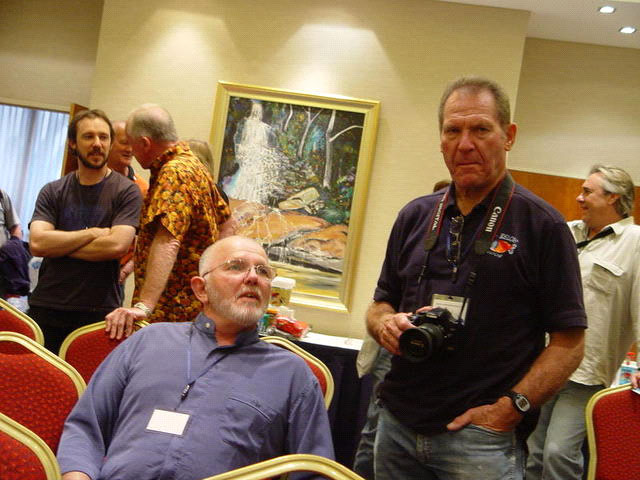
David Cooper & Gilbert Maebe
Our next speaker was Culum Brown who really likes fish and what makes them do what they do. Culum is currently a Senior Lecturer and Research Fellow at Macquarie University and has numerous published articles on fish cognition and behaviour. His presentation was lively and interesting and gave us interesting “fishy facts” while debunking many “false fishy fallacies”. Who would have thought that our beloved “dumb blondes of Sahul” (the rainbowfishes) could be demonstrated to have memory spans of over 12 months!! His research has direct implications for aquaculture, fisheries, conservation and of course fish welfare in the hobby.
After another satisfying lunch the other half of our IRG contingent (the Belgian boomerang), Gilbert Maebe was made welcome once again. Gilbert, a co-founder of the IRG, has made 6 presentations at ANGFA Conventions and I have enjoyed each and every one of them. He loves Australian fish, especially rainbowfishes, and really loves to catch his own so he can show all his friends all over the world what great fun it is. His wife Hilda accompanies him and often other friends – especially Franz-Peter and Ulli. His camera captures the essence of the countryside and especially the aquatic habitats and their inhabitants. This presentation was no exception and the title, “Western Australia” didn’t really prepare us for the contrasting spectacles of desert, gorges, waterholes and river beds of the Kimberley and Pilbara. We hope he continues to return.
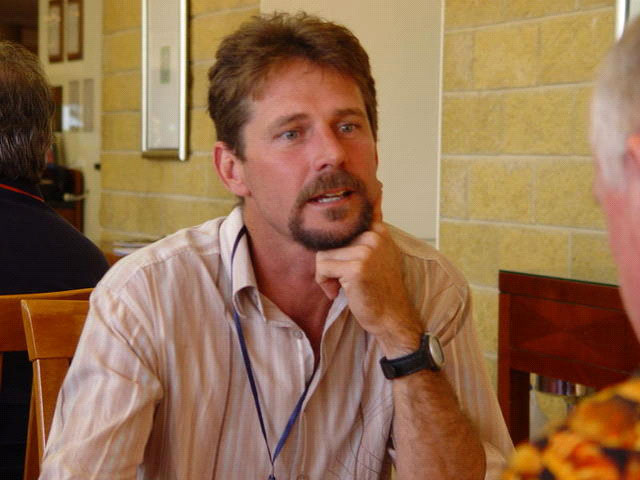
Glen Aland
Next presentation was by Glynn Aland who has been looking into various creeks and “puddles” up and down the east coast of Australia almost all his life. He has done this both as a biologist for various government departments and also for fun like most of us do. A couple of years ago he went on a family-oriented trip to the Torres Strait, and especially to Mabiaug Island, the ancestral home of his adopted brother. They also visited Moa Island, also populated by his brother’s close relatives. Glynn showed us some of the people, places and aquatic inhabitants they encountered and enjoyed while enriching their personal links.
This was followed by Diana Walstad’s second talk and it was excellent value from someone who is well-known world-wide for encouraging aquarists to consider natural, low technology planted tanks. Her book, “Ecology of the Planted Aquarium” has been widely acclaimed and considered to be required reading for anyone really interested in planted aquaria. She skilfully showed us a series of examples of beautiful healthy well-grown tanks she had developed using her basic principles which included soil-assisted substrates. I know I was convinced and I’m sure many others were too. It’s nice to know that you don’t have to be prepared to spend hundreds of dollars on the latest technology hardware to be successful.
After the ensuing afternoon tea with the final raffle we had a fitting finale to an ANGFA Convention – Gunther Schmida and “Australia’s OTHER Wildlife”!! Gunther is world renowned for his wildlife photography and especially his images of Australia’s freshwater fishes and reptiles.
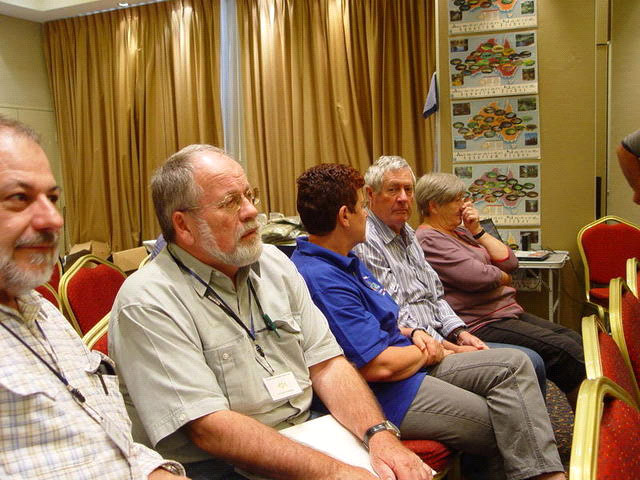
Gunther Schmida (and other esteemed faces)
His images have been published “everywhere” and have attracted numerous enthusiasts to the keeping of small Australian native fish. The advent of the digital “revolution” has introduced another burst of enthusiasm to Gunther’s search for new subjects and we were treated to a Powerpoint Presentation of wide-ranging subjects and technical excellence. Although the show went for almost an hour he held us enthralled the whole time and wishing for more when it was time for the official closing addresses. In appreciation of their contribution to the success of the weekend, all presenters at the conference were rewarded with framed Gunther Schmida images which will be treasured forever.
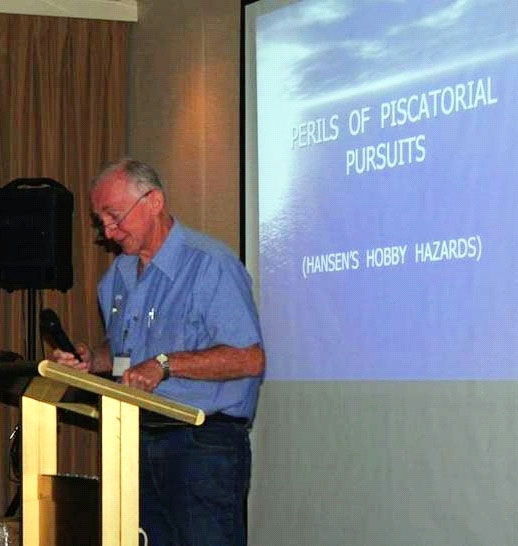
Bruce Hansen
All too soon another ANGFA Convention was over and its legacy of valued education and fellowship added to the “stockpile”. It was time to congratulate the organisers on the success of their endeavours, both financially and in terms of goodwill which will contribute towards the future of ANGFA. I had a great time once again and am looking towards Brisbane in 2011.
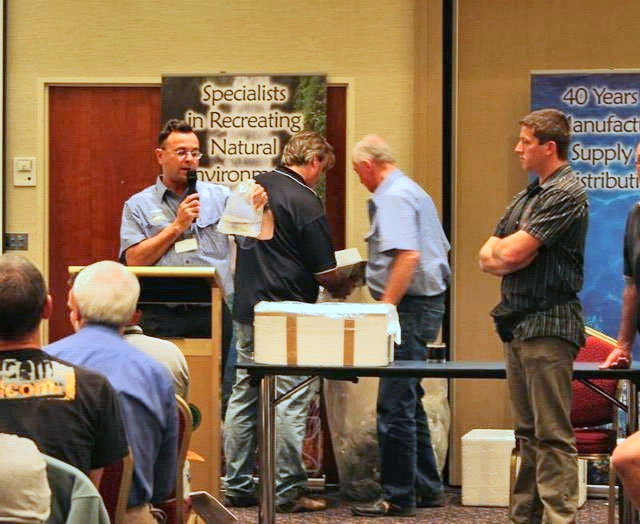
Auction Time
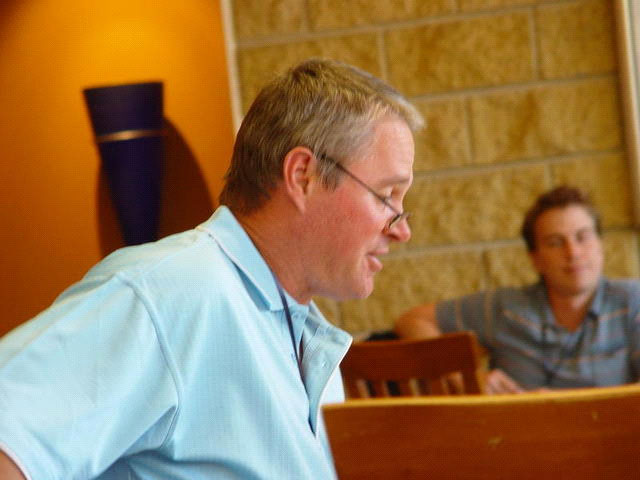
Michael Cocks
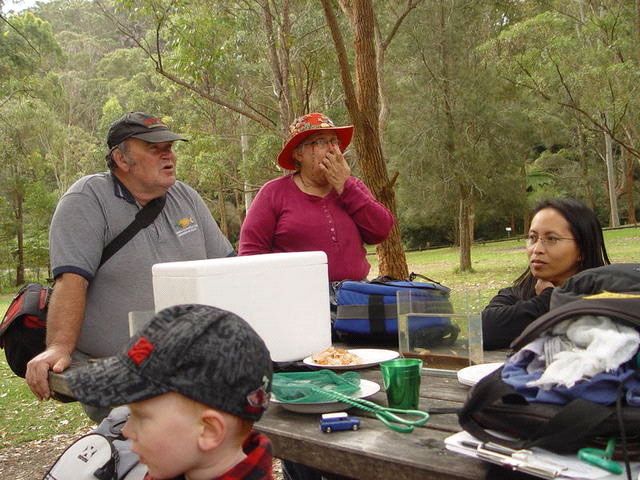
Gathering of the ANGFA Clans
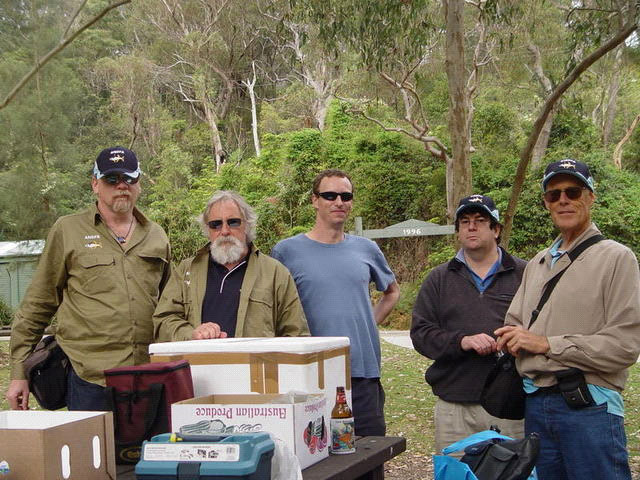
Gathering of the ANGFA Clans