ANGFA History
Marking ANGFA's 21st anniversary, this special edition of ANGFA News (October 2003, revised April 2005) looks back at how the association came together and grew – from its founding conversations in 1982 through to its state and international regional groups two decades on.
Celebrating 21 Years of ANGFA – 1982-2003
ANGFA rarely salutes its own, but after surviving 21 years and achieving considerable recognition for its activities over these years, ANGFA believes it is timely to reflect on its achievements and honour the people who, by their vision, enthusiasm and dedication have combined to make it all happen.
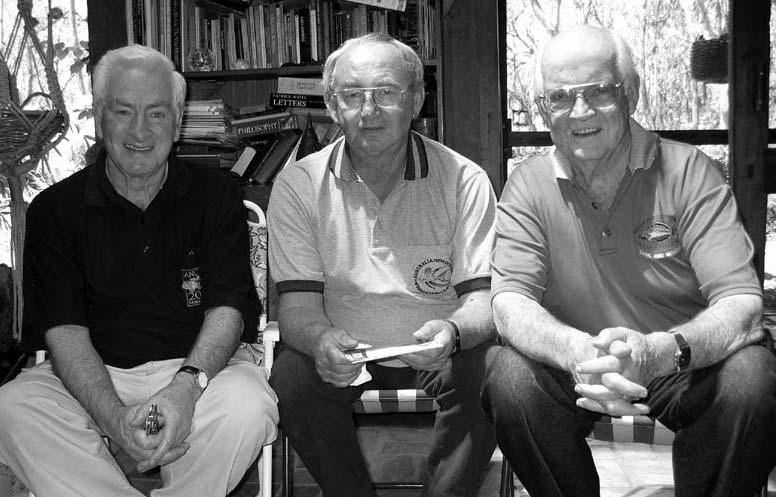
Salute Adrian Tappin and Graham Heidke, two native fish enthusiasts from Queensland who initially promoted the idea of forming a group of like-minded aquarists to get together and form a national association of aquarists interested in the keeping, propagation and study of the freshwater fishes of Australia and New Guinea and to produce a publication to record their endeavours. The idea of forming a group had been discussed with Neil Armstrong as early as September 1979. Ron and Elaine Turner also became involved in these early talks but it wasn't until November 1982 when Adrian and Graham came to Melbourne that things started to happen. A meeting was set up at the home of the Turners to “test the waters”. It was at this meeting with about 20 people in attendance that the idea was generally accepted and a further meeting was organised. [Adrian later edited and produced ANGFA Bulletin from October 1995 until 2000. Adrian (together with the help of Barry Meiklejohn) took the ANGFA Bulletin into the computer age producing it in desktop publishing format].
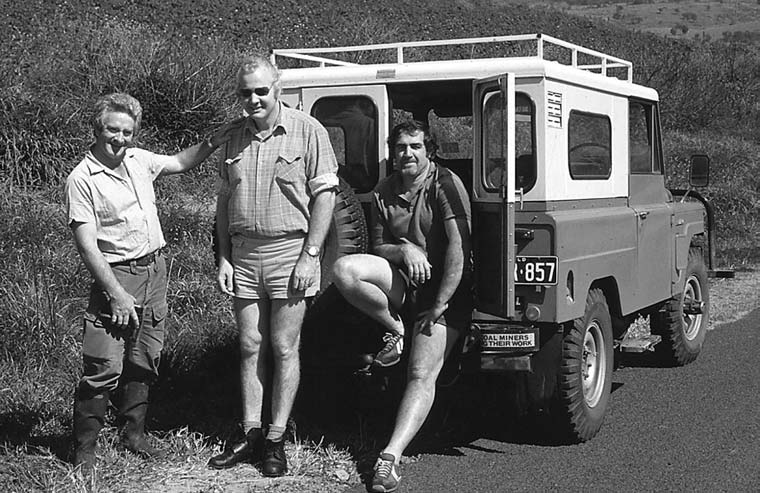
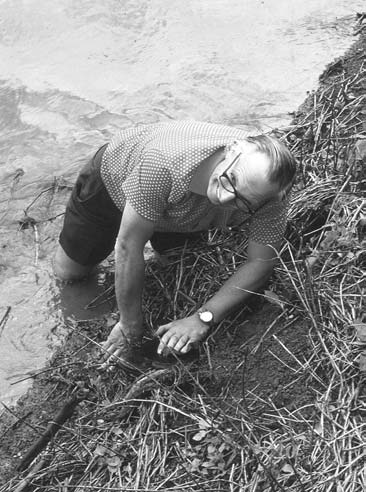
Salute Ron and Elaine Turner and Neil Armstrong, three Victorian aquarists with a similar passion to collect and keep native fishes, who responded to the Queenslanders' ideas and who gathered together other Victorian enthusiasts to discuss the concept. The three were great workers until Elaine's untimely death in 1984. Neil's remarkable knowledge of native fish species and his photographic abilities combined to make him an invaluable part of the group. [Ron Turner served as Secretary for 3 years. Neil was rewarded for his wonderful efforts with Life Membership of the group in 2000]. However, the proposed publication seemed to be a stumbling block both financially and technically for the newly forming group to contemplate. The committee then advertised for members. With insufficient funds to publish a magazine of quality, the committee gained the required money by obtaining 56 extra subscriptions from the existing membership with these being listed as Foundation Members. With guaranteed funds to cover the cost of publishing the first volume (4 issues) of the Journal the group were able to finally make more headway.
Australia New Guinea Fishes Association.
Foundation Membership Honour Roll
The following individuals and groups are credited with taking out Foundation Membership to help fund the costs involved in producing the first volume of Fishes of Sahul
- Alexander J. Anderson
- Chris Anderson
- Neil & Bev. Armstrong
- Ray Ashford
- Charles Barham
- Ron Bowman
- Glen Briggs
- Richard Brown
- Rod Campbell
- June & Alex Caughey
- Ross Chislom
- Vincent J. Cuartero
- Gary Dunn
- F. W. Fitch
- Paul H. Francis
- Danny & Amanda Genovese
- Graeme George
- R. A. Gray
- Mark Griffiths
- J. Grylls
- Norm Halliwell
- J. C. Hancock
- Bruce Hansen
- Graham Heidke
- G. A. Hides
- Kent Hortle
- Bob & Bev Lee
- Laurie Lee
- Glen Leiper
- Barbara P. Mayers
- Colin Palise
- Barry Reed
- R. Rofen
- Graham Rowe
- Peter Scull
- Stephen Serwathka
- Edward W. Shipsey
- Neil Smith
- Rod Smith
- Gordon Stables
- Heinze Staude
- Peter Surmon
- Adrian Tappin
- Edward C. Taylor
- Graham Thompson
- Ron Thompson
- Neil Travis
- Peter T'sang
- Ron & Elaine Turner
- Keith Williams
- Peter Wlodarcyzk
- Eastern District Aquarium Society
- National Fish Health Reference Lab.
- S.E.Qld Regional Group
- Sir Colin Mackenzie Zoological Park
- Western Suburbs Aquarium Society
Salute Ron Bowman, a commercial artist and fanatical aquarist, who, as fate decreed, meeting Neil Armstrong for the first time; joined him to drive to Mt. Macedon to view Barry Crockford's magnificent collection of New Guinea fishes and agreed to attend the second meeting of the group at the home of Graham Thompson. During this meeting, Ron roughed out the design of the proposed publication, the title … “Fishes of ?” (whatever the combined ancient land mass of Australia and New Guinea was called) and while doodling with naming and acronym possibilities, proposed the AUSTRALIA NEW GUINEA FISHES ASSOCIATION with the acronym “ANGFA”. Ron also moved that “no volume of the Journal be published unless subscriptions exceeded the cost of the production and distribution of such volume for that year”, thus ensuring that members would always get the publications for which they had subscribed. Graham later searched university libraries until he came upon the name “Sahul”. [Ron was honoured with Life Membership to the organisation in 1995].
Salute Ken Smales, a keen grower of aquatic plants, aquarist and a typesetter, who offered to set the articles for the Journal. ANGFA was very fortunate to have among its members a team of career professionals to design and produce the Journal. Two years later Ken took on the position of President/Chairman of the group. This position he held for 8 years and helped guide the group through its formative years. In 2000 he took over the group newsletter after the retirement of Adrian Tappin. He renamed the newsletter ANGFA News and has produced it up until this Special Edition which is his final edition. He intends to now go into retirement after 21 years of continuous ANGFA involvement.
Salute Graham Thompson and Barry Crockford for their part in early ANGFA formation. Graham was the first Journal Co-ordinator but transferred to South Australia unexpectedly after 2 issues. The position was then filled by Barry until the bushfire tragedy in 1983 which destroyed his home and most of his brilliant collection of New Guinea fishes which he had personally collected whilst exploring that island. Barry helped introduce several new species of fish into Australia which fired up much enthusiasm in the native fishes of New Guinea. Neil Armstrong then took on the Co-ordinator role in 1984, continuing in this position up to this present time (2003). Since its inception Neil has been “official photographer” for the group with his remarkable photos gracing many magazines around the world including our very own Fishes of Sahul. Neil's “eye for detail”, knowledge and enthusiasm for our native fishes as well as many other forms of wildlife/plant (terrestrial and aquatic) life have contributed to ANGFA's worldwide appeal. His photographic presentations have left many people very enthused both here and overseas where he has been keenly sought to do his presentations. Neil has been involved right from the conception of ANGFA and many hope he will continue with it for many years to come.
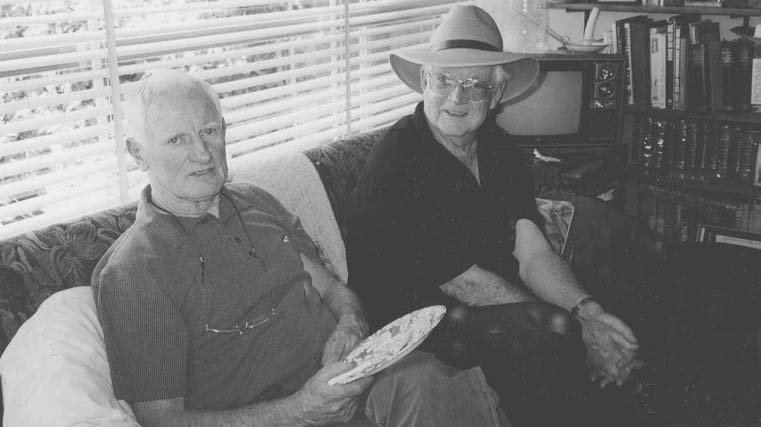
Salute all the volunteers who assembled colour prints into each individual magazine for the first 5 years until the first 4-colour Journal was produced in 1988. These 'glue sniffing' nights had a strong bonding effect in more ways than one. Many of these bonds still continue to the present day.
Salute Alex and June Caughey for their dedication to the cause – June was Treasurer for 11 years and was the backbone and drive behind many early ANGFA projects. June spent many a long night burning the ANGFA midnight oil. Alex was, amongst many other duties, Special Projects Co-ordinator. Alex also served as Secretary for 4 years. He edited and produced (together and in conjunction with Andy Wattam) our first newsletter in 1983 until December 1987. In 1989 the newsletter was much enlarged and became the ANGFA Bulletin which Alex edited and produced until his final edition in September 1995. Alex also produced mountains of other literature in promoting ANGFA and fishkeeping over the years. It was also Alex's insistence that made Fishes of Sahul the quality journal that it became. No matter where he was or what he was doing he was always pushing ANGFA and its ideals to anyone who would or would not listen. His reputation for lateness in production of magazines was also a much discussed item. Alex also did a tremendous job in producing and co-ordinating “Project Eachamensis ... the saving of a species from extinction” which brought him and ANGFA many kudos from around the world.
Salute Andy Wattam for his persistence and enthusiasm in organising the first two ANGFA conferences and his fearless efforts in conservation and complete dedication to ANGFA. Andy also produced some of the early Newsletters. Over the years Andy has been involved in many other projects and without his efforts ANGFA would not be the organisation it is today. He was rewarded with Life Membership in 2000.
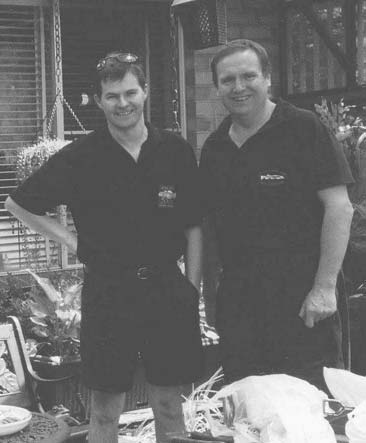
Salute Bruce Hansen for his consistent expertise in leading and recording wilderness surveys, his 6 years as President/Chairman and his liaison with Government fisheries departments on behalf of ANGFA. He has also been a prolific article writer for both our magazines since ANGFA's inception. Bruce was made a Life Member in 2000 for his efforts to the ANGFA cause over many years.
Australia New Guinea Fishes Association.
Executive Committee Members 1983-2003
- President/Chairman:
- Danny Genovese 1983
- Bob Lee 1983-1984
- Ken Smales 1984-1993
- Noel Harcourt 1993-1995
- Bruce Hansen 1995-2000
- Mark Chettle 2000-2002
- Derek Girkin 2002-2003
- Secretary:
- Amanda Genovese 1983-1984
- Ron Turner 1984-1988
- Bill Richardson 1988-1990
- Alex Caughey 1990-1994
- Glenn Briggs 1994-1995
- Doug Collom 1995-2000
- Tony Mather 2000-2001
- Heidy Rubin 2001-2003
- Treasurer:
- June Caughey 1983-1995
- Peter Surmon 1995-2000
- Glenn Briggs 2000-2003
- Journal Co-ordinator:
- Graham Thompson 1983-1984
- Barry Crockford 1984
- Neil Armstrong 1984-2003
- Editor/Art Co-ordinator:
- Ron Bowman 1983-2001
- Rudie Kuiter 2001-2003
- Photographer:
- Neil Armstrong 1983-2003
- Reprographics/Typesetting:
- Ken Smales 1983-2000
- Mark Chettle 1995-2003
- Rudie Kuiter 2000-2003
Salute Doug Collom and Peter Surmon for their work behind the scenes as Secretary and Treasurer from 1995-2000. Salute Mark Chettle and Rudie Kuiter for their roles in taking the Journal into the age of digital reproduction and with Rudie agreeing to edit the Journal when Ron Bowman retired from that role in 2000. Together they have continued the fine quality and traditions of the early publications team.
Applaud Dave Wilson for his goodwill and generous support of ANGFA over many years; also Eng Chua for his long term commitment and support to ANGFA. Applaud the many who have contributed to ANGFA administration over the years such as Danny and Amanda Genovese, Bob Lee, Bill Richardson, Noel Harcourt, Derek Girkin and Glenn Briggs.
Finally our heartfelt thanks to our Patrons, Dr. Gerald Allen and Rick Datodi for their consistent support and Heiko Bleher, who, with Jerry Allen, has given invaluable contributions to ANGFA with articles and also presentations at ANGFA conventions. We also applaud Gunther Schmida for the generosity of his knowledge, his superb photography and his high quality and informative articles. We must also salute our overseas ANGFA enthusiasts Gilbert Maebe and Franz-Peter Muellenholz who have treated us to some wonderful presentations which have enriched our conventions over many years.
ANGFA Regional Groups
ANGFA ACT
ANGFA (ACT) was officially formed in May 1994. The records show that Andy Wattam was voted in as President during a meeting at Andrew Boyd's home. The first fully sanctioned meeting was held on the 7th July 1994 at Andy's home in Latham. To the credit of the current committee ANGFA (ACT) had progressed at an astonishing rate. Andy's leadership has been exemplary with due recognition coming from the National body in the form of a Life Membership presented to Andy in 2000. ANGFA ACT held 2 extremely successful Conventions in 1995 and 1999. Andy was also editor of the ANGFA ACT Newsletter for a number of years. Probably the last major achievement for ANGFA ACT was the production of a much praised poster of Australian Capital Territory Freshwater Fishes. Sadly, things went wrong around this period and ANGFA ACT is now in recession. Hopefully in the not too distant future it will again arise from the ashes.
ANGFA NSW
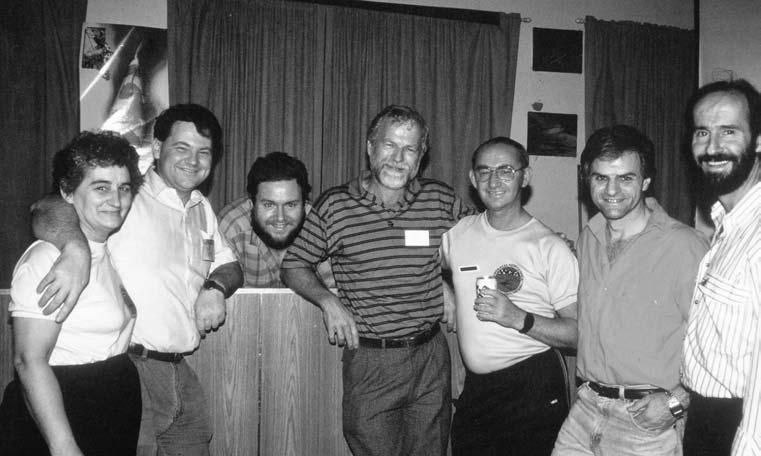
Initial contact was made by David Crass, lan Baddock and Barry Hollingsworth in 1994 and discussions were held at the Doncaster Hotel to start up a New South Wales branch of ANGFA. The first meeting was to be held at the Sydney Aquarium on availability of the education room. On the 2nd of August 1995 the first official meeting was held. ANGFA NSW was here to stay. Growing rapidly, ANGFA NSW continued with meetings and started to conduct field trips. A trip was organised to Dingo Creek near Taree to search for an unidentified goby or perch that had been caught there. Cameron Bee was the secretary, Derek Girkin was the man with the money, John Hutley the librarian, David Crass the species controller, lan Baddock the editor, Martyn Robinson the vice president and Barry Hollingsworth was the president.
Their logo at that time was designed by Martyn Robinson and it consisted of the Murray cod at the top, the Nepean herring at the bottom and the non-parasitic lamprey both left and right. The first guest speaker was Bob Gray talking about his experiences with breeding native fishes and who generously donated $70 to help them begin a bank balance. ANGFA NSW had a stand at the pet expo in 1996 which was well received and created more interest in the club. Then an article in the Hornsby Advocate on a carp eradication trip to a dam at Berrilea which resulted in the removal of 400+ carp ... and this led to Channel 10's Totally Wild getting in touch with Derek to discuss ANGFA and native fish. Totally Wild did a segment on carp busters and also Derek's fish room. That year they were involved in the pet expo again sharing a booth with Bob Croucher and also the “Profishionals” which generated more memberships. Contact from Australian Geographic resulted in a survey of the ponds on their property which was published in Australian Geographic Newsletter which is distributed Australia wide and generated a lot of interest from interstate and New Guinea.
ANGFA QLD Inc
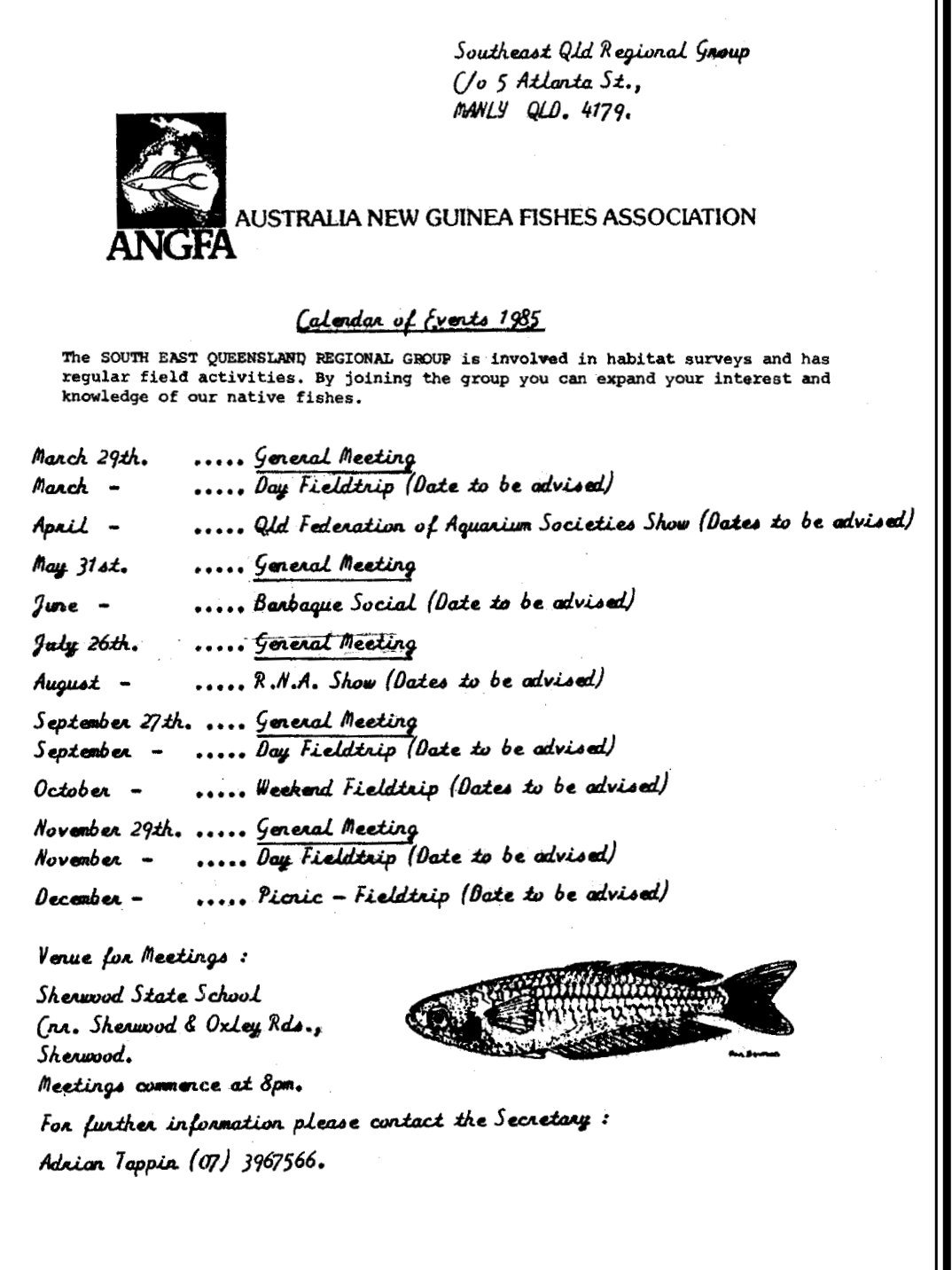
ANGFA (Qld) basically began at the same time the National Association was started following the visit of Graham Heidke and Adrian Tappin to Melbourne in late 1982. However, the concept of a National Organisation began much earlier than that. The idea of a National Association was a regular topic of discussion between Graham (Monty) Heidke and Adrian Tappin from Queensland and Ron Turner and Neil Armstrong from Victoria. Ron and Neil were regular travellers to Queensland for a number of years prior to the inaugural meeting at Melbourne and usually met with Graham and Adrian at the infamous Dinmore barbeques. Initially, it was not planned to have an official Regional Group in Queensland as there were quite a number of Aquarium Societies already established and it was thought that there would not be enough interest to support another. An approach was made to the Aquarium and Terrarium Society of Queensland to have a “Native Fish Study Group” similar to one which operated as part of the Eastern Districts Aquarium Society in Victoria. Unfortunately, or as history has shown fortunately, there was no imminent interest shown by the A&T Society so the plan was abandoned. However, due to the persistent nature of Gordon Hides, it was decided to start a group with regular meetings being held in private homes. In early 1983, the first meeting was attended by approximately five people and was held at the home of Adrian Tappin at Manly, thus a Queensland Regional Group was born.
Australia New Guinea Fishes Association.
Conventions
| # | Year | Date | State | Venue |
|---|---|---|---|---|
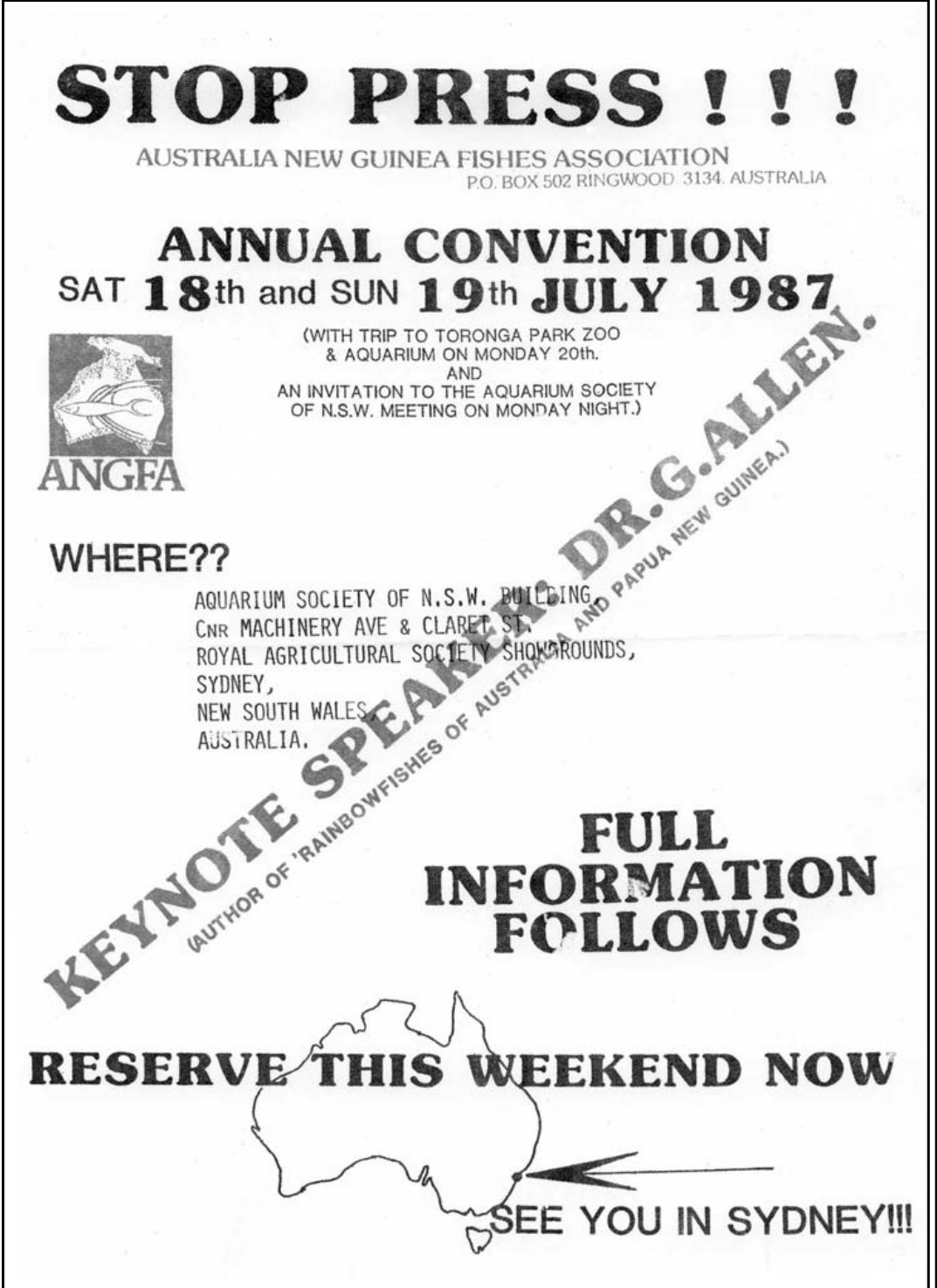
| 1 | 1987 | 18-19 July | NSW | Aquarium Society of NSW Hall, Royal Showgrounds |
| 2 | 1988 | 1-3 October | NSW | Aquarium Society of NSW Hall, Royal Showgrounds |
| 3 | 1990 | 24-25 March | Qld | Mt. Cootha Botanical Gardens |
| 4 | 1991 | 19-20 October | Victoria | Dorset Gardens, Boronia |
| 5 | 1993 | 25-26 October | Townsville | Colonial Gardens Resort Conference Centre |
| 6 | 1994 | 22-23 October | Brisbane | Virginia Palms Conference Centre |
| 7 | 1995 | 21-22 October | Canberra | Eagle Hawk Hill Resort Conference Centre |
| 8 | 1996 | 19-20 October | Melbourne | Royal Parade Irico Hotel |
| 9 | 1997 | 18-19 October | NSW | Oxford Koala Hotel |
| 10 | 1998 | 21-25 October | Brisbane | Virginia Palms Conference Centre |
| 11 | 1999 | 22-24 October | Canberra | Eagle Hawk Hill Resort Conference Centre |
| 12 | 2000 | 20-22 October | Melbourne | Cilom's Conference Centre Tullamarine |
| 13 | 2001 | 27-28 October | Adelaide | Haven Marina Inn, Glenelg |
| 14 | 2002 | 26-27 October | NSW | Port Macquarie Sails Resort |
It was to become known as the “South-East Queensland Regional Group” (SEQRG). Meetings were organised for the last Friday of each month to be held at different members' homes on a rotating schedule. However, at a later meeting it was decided that if this young organisation was to grow it would have to have a permanent meeting place, so the group moved into its first public location at the Sherwood State School, with meetings held bi-monthly. Early Office Bearers were Graham Heidke, Adrian Tappin, Glenn Leiper, Rod Campbell and Bruce Hansen and it is encouraging to find that most of them are still actively involved today. Membership was offered to any person with an interest
in the fishes of Australia and New Guinea, although species from New Guinea were few and far between in those days. Habitat surveying was to be a major part of the group's activities as it was believed that much more information was needed on our native fishes. Attempts were made to attract regular speakers to the meetings on subjects as diverse as research, biology, ecology, conservation and aquarium management including the practical and theoretical aspects of aquariculture and aquatic science. Membership fees were set at twelve dollars. In the latter part of 1984 SEQRG became a founding member of the newly formed Queensland Federation of Aquarium Societies (QFAS) and in April 1985 had their first public display at the “Hobby and Trade Show” held at the Chandler Sports Complex.
Membership increased slowly and by the end of 1985 there were only 20 members. The South-East Queensland Regional Group continued to grow, never missing the opportunity to promote itself and the native fish hobby, all be it with rather primitive promotional material compared to what one finds today, but it apparently did the job. Membership increased to exceed 150. In June 1985 the first official Newsletter was produced under the professional guidance of one Jarvis Finger, (the only “Finger” in Moggill) and was welcomed by the general membership. The newsletter had regular columns on Club News, Breeding Natives, Feeding Natives, Books, and Keeping & Caring. In 1989, Bruce Hansen, Sue Smith, Adrian and Fran Dawson took over the newsletter reigns as publication committee following the departure of Jarvis Finger. The publication of a regular newsletter in the intervening months with bi-monthly meetings was a major factor contributing to the success story of the SEQRG.
The Sherwood State School continued to be the official meeting place, but because of increasing membership, it became obvious that a larger meeting place was needed. In February 1989 a new location was found and meetings moved to the Nundah Municipal Library. However, this location was quickly outgrown and in June 1989, another move was made to the present location at the Bar-Jai Clubrooms in Clayfield. 1990 was a big year in the history of the South-East Queensland Regional Group as they were sponsors of the third National ANGFA Conference in Brisbane.
As the National Organisation was not incorporated and with the interest of Queensland members paramount, it was decided that the Group should be incorporated before running the Conference. So on the Eighth day of February 1990, the South-East Queensland Regional Group became incorporated and would be known officially as ANGFA (QLD) Inc. Thus another chapter was written into Queensland history. 1992-1993 were also historic years – attendances at the bi-monthly meetings continued to increase and field trips which had become a regular feature of ANGFA (Qld) were well attended. Highlights were the “Pet and Hobby Expo” where members efforts were rewarded by winning the coveted “Best Club Display” for two consecutive years. 1992 was also the year that the Newsletter took on a new look under the capable command of Barry Meiklejohn. The advent of Barry with his desktop skills and flair lifted the newsletter to unsurpassed heights. Today the magazine is very capably edited and produced by Adrian Tappin. In 1994 another successful National Convention in Brisbane was held. The audio-visual extravaganza presented by Barry Meiklejohn and the “Fish Widows on Tour” concept inaugurated by Kath Wager and Aimee Brookes are now a standard component of the ANGFA Convention scene. The years 1995-1996 saw ANGFA (Qld) consolidate its position as a significant aquarium group in Queensland and all elements are in place for its continuing success.
ANGFA VIC
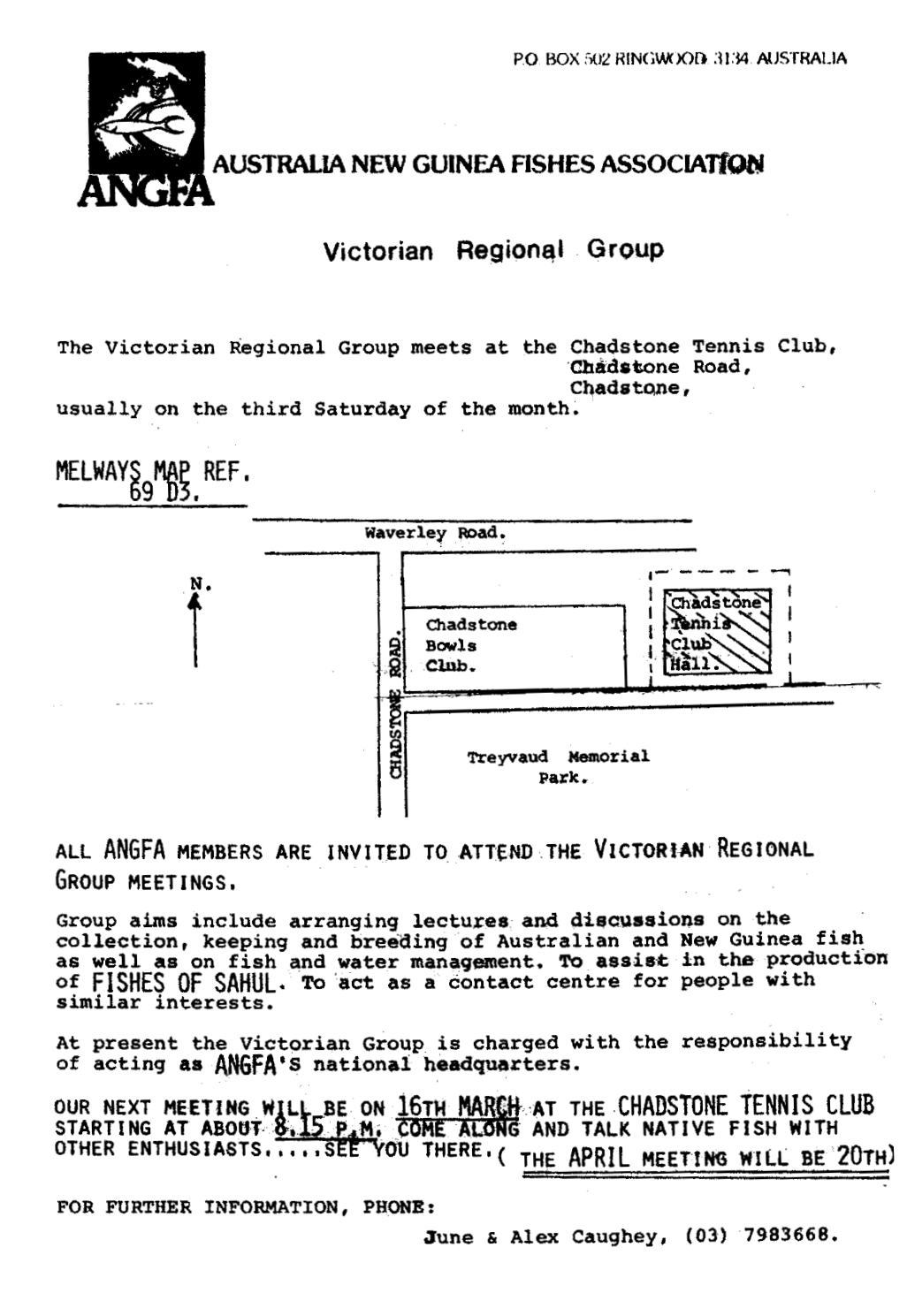
The original ANGFA committee was formed from Victorian aquarists in 1982 and national administration was conducted by Victoria from inception in 1982 until October 1994 when the Annual General Meeting voted to give administrative responsibility to Queensland who then formed a new National Committee. During the early years of the Victorian administration there was no official regional group in Victoria but the local meetings were in essence regional group meetings held by ANGFA National in Melbourne. Initially meetings were held in various members' homes but when numbers grew it was decided to hold meetings at the Chadstone Tennis Club Hall. A number of meetings were also held at the Aquarium Society of Victoria's Hall in Clifton Hill. Due to most committee members being on both National Committee as well as the Victorian Committee it was felt unnecessary to run a separate group.
It wasn't until October 1994 when the National Committee duties were transferred to Queensland that the Victorian Regional Group was officially formed with bi-monthly meetings, a local newsletter, local committee and a defined local structure – these meetings were held at the Melbourne Zoo. Ken Smales was elected President, Glenn Briggs was Secretary, June Caughey became Treasurer. Ken Smales and Alex Caughey shared editorial duties. For the first few years meetings were held on a Saturday night due to a proliferation of other aquatic meetings held on Friday nights. Eventually this was sorted out allowing the ANGFA Vic Regional Group to hold its meetings on a Friday night. ANGFA Victoria decided to adopt Galaxias fuscus as its logo. This species is unique to Victoria and is one of Australia's most endangered fishes and a Flora and Fauna Guarantee Act protected fish in Victoria. ANGFA Victoria members were involved in its re-discovery back in 1980 when Frank Seymour discovered some near Woods Point. These original few fish were brought out and given to Alex Caughey to care for. Unfortunately none survived past the first 24 hours. A combination of transporting and a lack of information on the fish's needs led to their demise. In 1982 Neil Armstrong, Barry Crockford and Rudie Kuiter set out to collect further specimens which led to their reintroduction to scientific circles. This species is totally protected so they will not be found in hobbyist circles; in scientific circles there is debate about their correct classification. But let the scientists argue ... what's important is that it has been rediscovered ... and ANGFA Victoria is proud to have contributed to the rediscovery. ANGFA Victoria is now well established and its meetings have now transferred to the Field Naturalist's Clubrooms in Blackburn.
ANGFA WA
Ken Shaw, Syd Adams, Mark Johnson and David Block founded the WA Regional group in 1992. After meetings in member's homes for a couple of years, they commenced meetings in 1995 in the South Perth Rotary Hall on the fourth Monday of each month.
SANFA Inc
The club was formed in 1992 by a group of members of the South Australian Aquarium Society Inc. By mid 1994 the group voted to establish itself as an independent incorporated body. The club applied to become an affiliate of ANGFA and in late 1996 was accepted. SANFA was very grateful to receive copies of Fishes of Sahul for the library from ANGFA and looked forward to a long association with ANGFA as a Regional Group. A number of members also subscribed to ANGFA. With more promotion it is hoped for this to increase over time.
The objects of the Association are:
- the keeping and propagation of native fish of Australia and New Guinea, particularly South Australian species
- the surveying of habitats to establish a body of knowledge relating to native fishes
- the continual study of matters relating to the ecology and conservation of native fishes and
- informing the community and appropriate agencies of knowledge gained.
The Association meets at the Payneham Community Centre, Payneham Road, Payneham on the first Monday of every month starting at 8:00pm. Visitors are always welcome to attend. SANFA makes available monthly field trips to its members. Members are also encouraged to display native fishes each year in the Royal Adelaide Show and as a rule the club also display native fishes for educational purposes in the Royal Show.
The dream of a public freshwater aquarium in Adelaide started with a previous generation 80 years ago. In 1996 the club completed the display of eight aquaria housing fishes of the Murray-Darling Division in the Adelaide Zoo bringing the dream to reality. Recently the club revisited the display at the Zoo, it was the first visit for new members and very satisfying for the members who were involved in the project to see the display in pristine condition. The zoo now have Mogurnda adspersa (Purple Spotted Gudgeon), Melanotaenia fluviatilis (Crimson Spotted Rainbows) and Ambassis agassizii (Glass fish) in their ponds breeding up new stock for the aquariums.
The club is in the process of producing a Poster and Booklet of Freshwater Fishes in the S.A. Gulf Division. Interstate and country members are welcome to join the South Australian Native Fish Association at a small cost. All members receive a copy of the Australis publication quarterly.
ANGFA North America
Three ANGFA members in the U.S.A., Roy Hunter, Scott Buckel and Brian Lang combined to form the North America Regional Group in 1997. About 100 members in North America received ANGFA publications after they had been bulk mailed to the committee. After Roy Hunter migrated to Australia numbers dwindled to about 30, but renewed efforts are currently being made to re-organise the group.
ANGFA Russian Regional Group
In 1992 we had an “official” ANGFA group operating in the Soviet Union. Several years earlier Sergey Makarenko had made contact with Ron Bowman enquiring about Australian native fish. One thing led to another and before long a special “Sergey Fund” had been set up to help our aquarist friends in Russia. We sent Sergey a full set of Fishes of Sahul as well as ANGFA Bulletins (we were so disturbed with the situation over there for our Russian friends we even sent food parcels). These magazines were circulated amongst members situated in Tomsk, Novosibirsk, Nazarova, Krasnoyarsk, and Khabarovak. Sergey also arranged translations to widen the information base on Australian native fishes throughout Russia. Any Russian taking out a yearly subscription to Fishes of Sahul would have cost them approximately a year's wages. Communications were also difficult due to the Russian postal system (not to mention the outrageous cost of postage for Sergey). Sadly, as the Russian economy collapsed the members could no longer afford to travel to meetings.
Associated Groups
Rainbowfish Study Group of North America
This group was started shortly after ANGFA was formed and concentrated on Sahul fishes with the general emphasis being on Rainbows and Blue eyes. It published a Magazine titled The Rainbow Times. The RSG continued for many years producing many volumes of its own magazine which regularly contained a Buy/ Swap/Sell segment. Early editors of the Rainbow Times were Gary Lange, Scott Buckel and Kevin Hosmer. All three came to Australia for some of our early conventions. Like the early editions of Fishes of Sahul the Rainbow Times “glued” in colour photos until it was able to afford colour reproduction.
Internationale Gesellschaft Fur Regenbogenfische (IRG)
The IRG is a German based group which promotes the keeping and study of Sahul fishes. It was founded by 18 people in 1986 in Duesseldorf. By the end of 2003 it had nearly 500 members in 13 countries, with eight different languages spoken, also overseas members in Australia, Canada, Japan, and the USA. Management of the group consists of three members, the President, the Secretary, and the Treasurer. All three have held their positions many years. The IRG is an incorporated society with the status of a non-profit organisation. In Germany the IRG has six regional groups, where members meet mostly four times a year. Meetings normally consist of a fish sale with semi-adult fish, a lecture (mostly with slides) and a long chat. In Europe it has six country groups where members meet between two and four times a year. Normal meetings run similar to regional groups. Both types of groups are part of the IRG, they are not societies in their own right. All groups have a leader, but he is not elected, just named. All meetings are open for guests. Once every year the IRG has a General Convention, chiefly on the second weekend of July, usually one year in Germany, another year in a neighbouring country (2004 near Vienna, 2005 near Berlin, 2006 near Prague). Between 100 and 150 people attend the conventions which is organised by the local group. Conventions usually consist of presentations featuring speakers that its smaller single groups can't afford. For example 1996 featured G. Allen; 1999: N. Armstrong and in 2003 G. Schmida. Other ANGFA members have also done presentations at Conventions. A maximum of 5 presentations are held during the convention, because members want to have enough time for talking to each other. The main languages during the convention are German and English. During the convention they have a fish sale, featuring probably the most rainbowfish and goby species available worldwide. They sell, buy and trade fish, plants and equipment; auctions are never carried out. The IRG publishes its magazine in German and Dutch four times a year with 48-52 pages. An English version was also published but has now ceased because only few members were unable to read German or Dutch. For three years it has printed its magazine with a coloured cover and the inside pages have black and white pictures and text. The pages with IRG internal news, such as the fry list, group reports, meeting dates, etc. are printed on yellow paper and can be removed if needed.
For some years past the IRG has published a folder: Rainbowfish and other fish from the fifth continent, with information about keeping and breeding rainbowfish and gobies; every species has a colour photo of the fish and the habitat, including the habitat variations. It includes a map of Australia and New Guinea as well as lots of other information about time of description, first import to Europe and other reading material. The folder is available in German language exclusively. All reports about fishes are written by different members who have knowledge about keeping and breeding the species. Since IRGs foundation its annual subscription has remained at 25 Euro (A$40). Subscription includes magazines and is equal for all members, even for overseas members. The IRG accepts cc payment and paypal. IRG can be found on the internet at www.irg-online.de where its homepage can be located as well as many other interesting topics and items, for example it even has a forum for questions.
ANGFA – An Overview
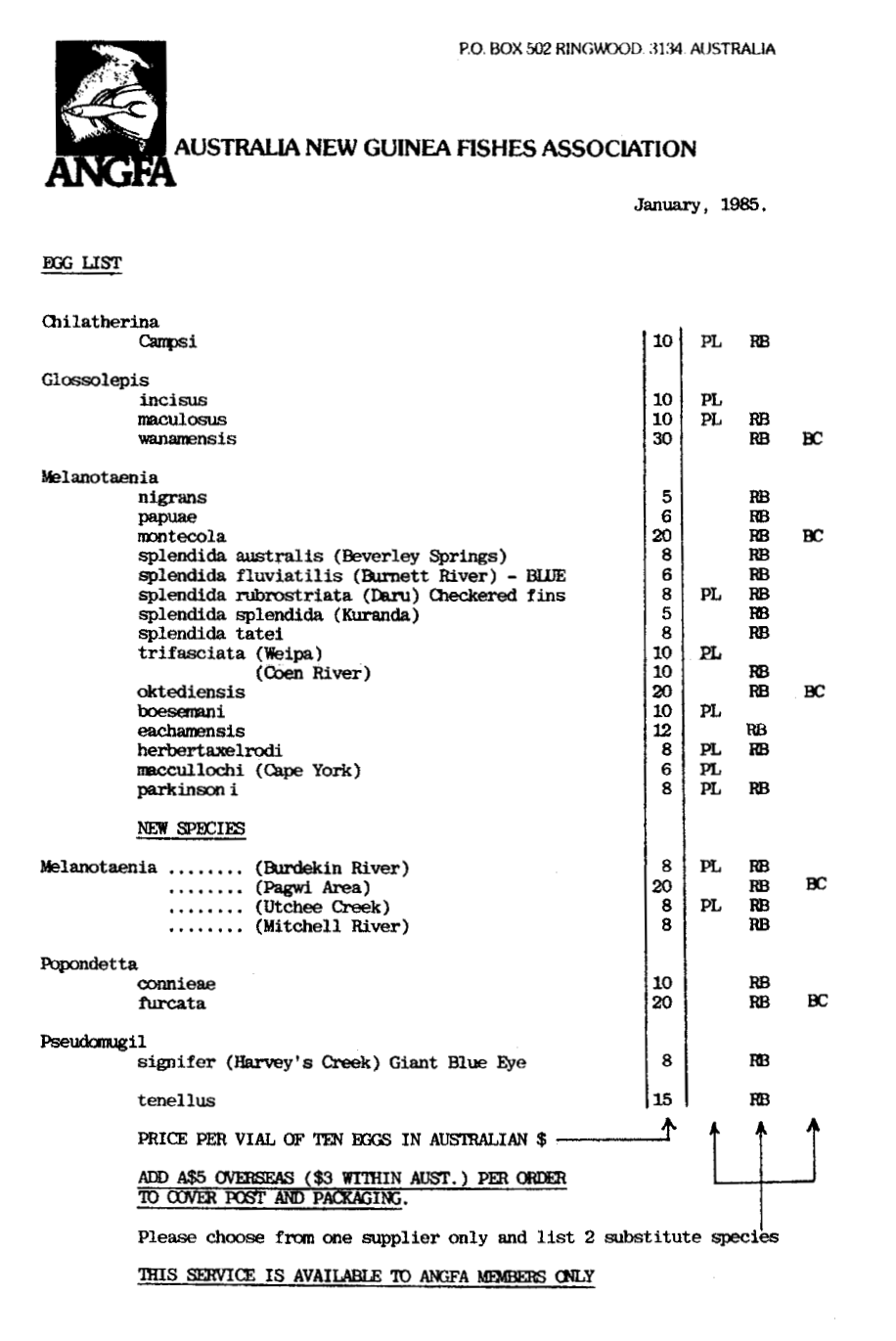
When ANGFA was founded in 1982 the primary aim of the Association was to provide a means for the exchange of information between hobbyists and fisheries scientists who had a special interest in the fishes of Australia and New Guinea. This aim was expanded to include the production of a high quality journal which would be up to date and of real value to hobbyists and scientists alike. The journal Fishes of Sahul is now about to go into its 21st year of production. Another aim was to provide true species, tribes and type locales of the fishes of Australia and New Guinea to members and to researchers. This was carried out through a carefully managed collection and breeding program. ANGFA members used tried and proven techniques which enabled them to breed the fishes and ship the eggs throughout Australia. Eggs were shipped to a number of countries around the world. Ron Bowman instigated this programme in 1984 and was soon joined by several other ANGFA members. The Egg Programme continued for a number of years. It allowed many aquarists from around the world to start their collections of fishes for breeding and studying. On a number of occasions eggs were supplied for research purposes. The importance of this project was:
- The availability of guaranteed true fish enabled researchers and aquarists to have a ready supply of pure bred species,
- The availability of these captive bred eggs greatly reduces the pressure on wild populations and the environment, and
- The “environmental” awareness which this project created encouraged our members, and others, to be more aware of our aquatic environment.
- Our third aim was to provide a means where hobbyists, scientists and other aquatic-minded people could make contact.
We have achieved this through our journal and regular newsletters, membership lists, and our national conventions. Another programme that was instigated in 1983 was to supply photographic slides to members both here and overseas. Neil Armstrong made available sets of slides from his magnificent collection. This was another early concept that was well received and continued for a number of years. ANGFA is a vibrant association which is increasing its influence with hobbyists, scientists, and institutions throughout the world. Its national conventions provided yet another opportunity to bring together the world's foremost experts on Australia and New Guinea's fishes and so by the interchange of ideas increase both theirs, and the audiences knowledge of this treasured resource.
ANGFA – A Valuable Community Asset
ANGFA, on a national and state basis, is proud of the valuable and important services which it has provided over the years to the community. Some of these projects and services include:
Eachamensis Project
In July, 1987, the rainbowfish Melanotaenia eachamensis was declared extinct in the wild. This small fish was only known to be in one location, Lake Eacham, a small crater lake 40km south-west of Cairns. The cause of the fish's demise is probably due to the irresponsible introduction of four new Australian species to the lake. Regular surveys by the Queensland Museum and Chris Barlow from the Queensland Department of Primary Industries Fisheries Research Station at Walkamin confirmed the extinction. Fortunately ANGFA held a small captive population of some 5 female and 18 male fish. ANGFA undertook a special breeding and research programme. ANGFA members were able to supply specimens of this species to Taronga Park Zoo to be used for a special display of endangered species. 50 eggs were supplied to Walkamin Research Institute in Queensland from which source they eventually produced 3000 fish.
ANGFA and the Aquarium Hobby
ANGFA was first established through the support of the aquarium hobby. Now we help support them through our sharing of information. ANGFA participates wherever possible with local hobby groups and is represented at State level with aquarium “parent body” groups. ANGFA has members in all states and territories in Australia and in many overseas countries. We encourage these members to make personal contact with local aquarium groups and liaise with them.
ANGFA and Fisheries Researchers
ANGFA has an on-going commitment to supporting scientific institutions and fisheries researchers whenever possible. The Queensland group works very closely with the Queensland Museum. The ongoing co-operation provides volunteer manpower to the museum for aquatic field surveys. ANGFA also supplies, free of charge, specimens specifically requested by researchers. Using our extensive network within the aquarium hobbyists, the scientific community and government institutions, we locate the necessary fish and fly them to the researcher.
ANGFA Overseas
ANGFA has members in many countries. We encourage overseas members to work with local aquarium societies and fisheries scientists to promote knowledge of Australia and New Guinea fishes. There are several overseas groups which have an interest in our fishes. We share and exchange information with these groups. Our journal Fishes of Sahul goes to a number of overseas libraries, universities and fisheries research centres.
ANGFA and Field Research
ANGFA members make regular field trips to local and remote parts of Australia. Members carry out collections and make field notes which could be of assistance to aquarists and researchers. Habitat descriptions and information about the locations of collection sites have been invaluable for the Queensland Government's Nature Source 2000 database which is an accurate record of the fauna of Queensland. New species are forwarded to the correct “experts” for taxonomic description.
ANGFA – A Community Resource
ANGFA receives requests for information from individuals and groups from throughout Australia and around the world. We do not see ourselves as the repository of all information on Australian and New Guinea fishes, even though we do hold a considerable library. We see ourselves as a valuable community resource which can quickly direct enquires to the right “experts”. This provides one of our most valuable services to the community, getting the question and answer together.
ANGFA has achieved much over its 21 year history – we would like to think that it can continue to carry on achieving over the next 21 years.
Salute to the ANGFA Widows
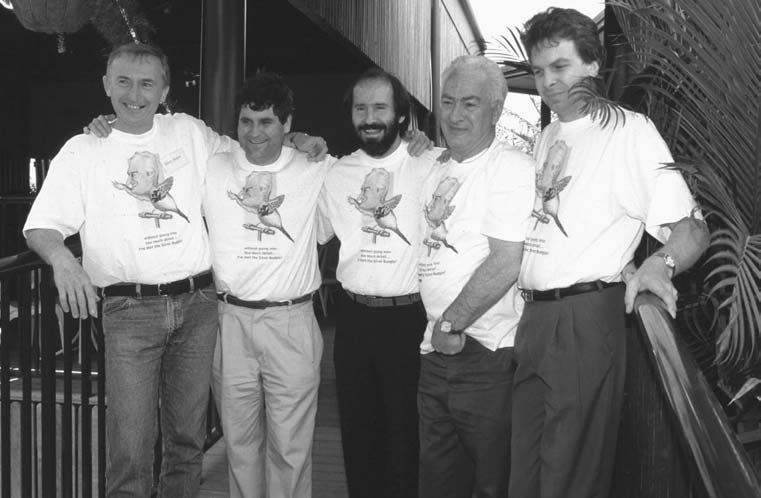
Our final and Special Salute is to the “fish widows” – our beloved spouses and partners who have allowed us to indulge in our favourite passion – the hobby of sampling, studying and breeding of the wonderful fishes of Australia and New Guinea.
This special edition of ANGFA News – Celebrating our 21st Birthday – is the result of much research, and help from many sources.
Some of the material used is from unknown authors.
Known authors are Ron Bowman, Alex Caughey, Adrian Tappin plus my own efforts.
Photos are also from a number of sources but mainly from Neil Armstrong.
Every endeavour has been made to make sure dates are correct but due to lack of records some may be suspect.
My very special thanks go to both Neil Armstrong and Ron Bowman for their help and assistance in getting this Special Edition together.
Ken Smales – Editor
This is a revised edition (April 2005) of the Special Anniversary Edition of ANGFA News originally published in October 2003